
Fish Species
Fish Species List
The streams, rivers and wetlands in the South Nation watershed provide habitat for 72 fish species. SNC’s fisheries scientists play a role in various studies to gain knowledge about these aquatic communities.
The ability to distinguish among fish species is important. Some local populations receive protection as Species at Risk and are the most vulnerable components of the watershed’s biodiversity. Other fish are invasive alien or introduced species that are not native to the area.
Learn more about all of your gill-bearing neighbours by clicking on the species names below.
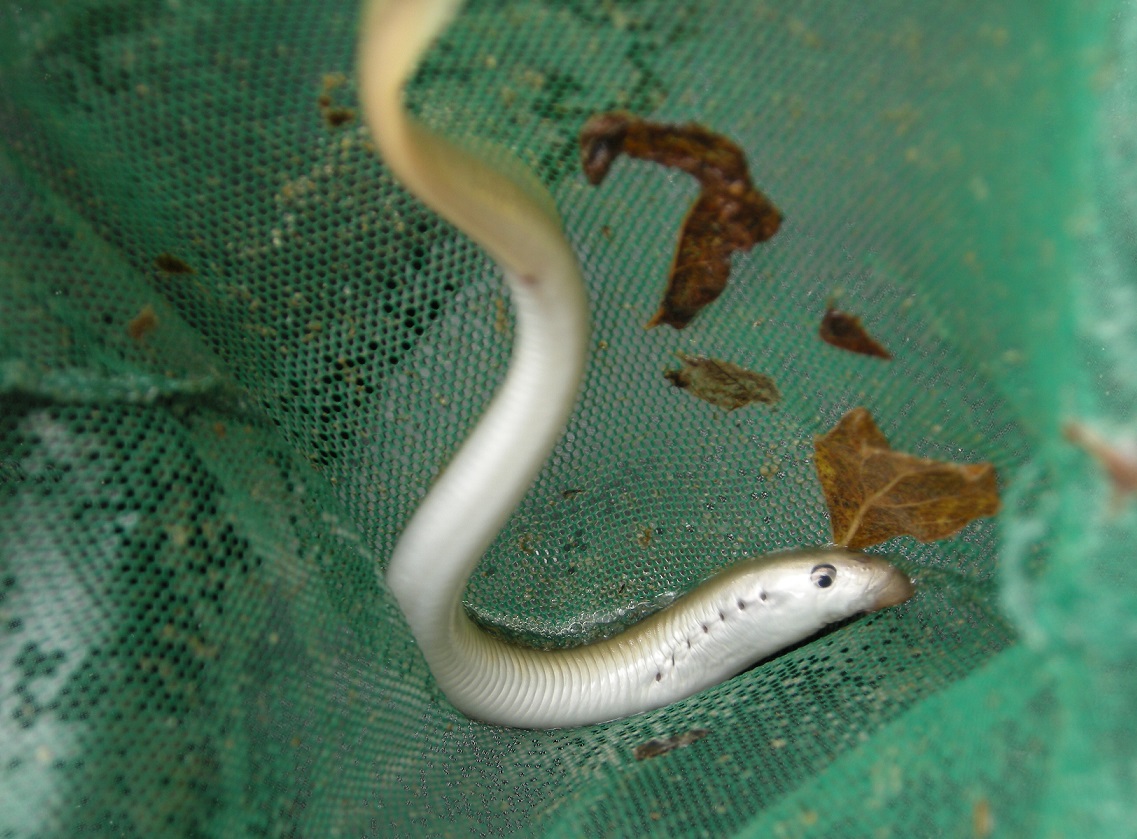
Description: American Brook Lamprey has characteristics which are eel-like, as well as no jaw, teeth moderately developed in adults, and a sucking disk.
The first and second dorsal fins are separate with lateral pores un-pigmented. The dorsal fin is divided into two lobes—the posterior is continuous with the caudal fin and the anterior is separate.
The coloration is brownish to light gray or silver (adults only) on dorsal surface and flanks, grading to light gray/brown, olive or off-white.
The typical length of an average adult is around 130-165 mm.
Habitat: This species prefers cool, often spring-fed streams, ranging from small to medium size with clear water. Stream beds are sometimes made up of sand or small-sized gravel.
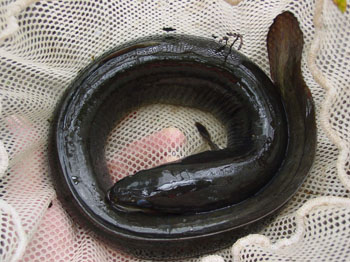
Description: American Eels are long, smooth, snake-like fish.
They vary in color, from green to yellowish-brown, with a white belly. They have tiny, oval scales and a continuous fin over their entire body, stretching around the tail. The typical size for this species is averaging 2-5 feet (2 feet for males, 3-5 feet for females).
Habitat: Eels hide in burrows, snags, masses of plants, tubes, and other types of shelters. They are found in multiple habitats including streams, rivers, and muddy or silt-bottomed lakes.
Description: The Banded Killifish has a small upturned mouth and has 12 to 20 vertical bars. Their typical size can reach up to 114 mm.
Habitat: Warm surface waters of clear streams and near shores of lakes support this species.
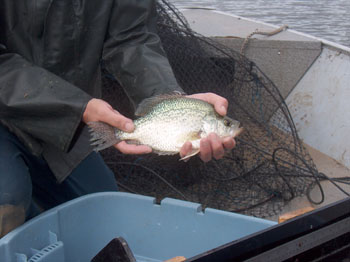
Description: Black Crappie has a deep, thin, flat body with silvery sides marked with irregular black blotches and a distinctive upturned snout. The typical length is 4–8 in (10–20 cm).
Habitat: In May and June, Black Crappie is found in shallow, weedy areas and around fallen trees, stumps, and other shoreline obstructions. It seeks deeper waters in summer and fall.
Description: This species has a upturned mouth, black pigment on snout and chin, scales darkly outlined and a zigzagging stripe along its side. This small fish can reach a maximum size of 71 mm.
Habitat: Blackchin Shiner prefers vegetated, near-shore areas of lakes and small rivers.
Description: This specieshas a black stripe around the snout, black crescents within the stripe along its side, and scales darkly outlined except above dark stripe along silver the side. It can reach a maximum size of 81 mm.
Habitat: It dwells inclear, cool, weedy streams and shallow bays of lakes with gravel or sand beds.
Description: Bluegill have a flat, deep body with a dark olive back, bluish iridescent sides marked by 6 to 8 vertical dark bars, and a black gill flap. The throat is white to yellow on females and bright orange on males.
Habitat: Bluegill is found in shallow, weedy areas with an abundance of underwater debris and often suspended in loose schools around docks, fallen trees, and rock piles in summer.
Description: This species has crowed scales between head and dorsal fin, a blunt snout, an overhanging small mouth, and a conspicuous black spot on the caudal fin base. It seems that the scales are darkly outlined to form a cross-hatched appearance. The typical size for a full grown Bluntnose Minnow is 112 mm.
Habitat: This minnow can be found in many river channels over substrate of sand, gravel, rocks, or silt. It prefers to avoid heavy vegetation.
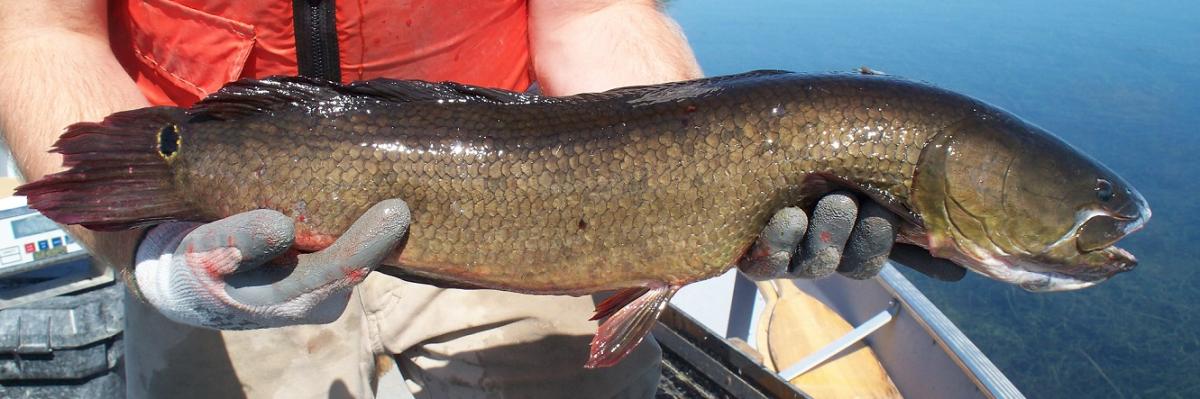
Description: Bowfin is a long cylindrical fish, with no barbells, and a rounded, short anal fin. The body color is mottled olive green to light brown on the back. A prominent black-spot surrounded by an orange or yellow ring is located on the bottom of the caudal fin on juvenile and adult males. The typical size of this species averages 46-61 cm (18-24 in).
Habitat: This species prefers habitat that is swampy, vegetated bays of warm lakes, and rivers. It shares many characteristics as the fish family Burbot (Lota lota).
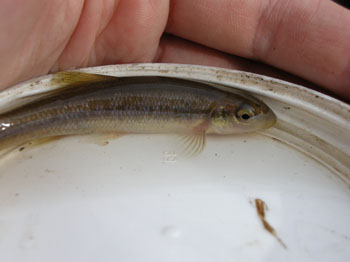
Description: Brassy Minnow has a brassy-yellow body with a stripe, developed on the ear half of its side. The typical size of this minnow can reach up to 97 mm.
Habitat: The preferred habitat is small weedy streams with mud, gravel or sand beds covered with organic vegetation. It is also is commonly found in shallow bog ponds, lakes, streams, and silt-bottom bodies.
Description: Brook Silverside is small fish that has a distinguishing mouth. It is a long, slender, translucent fish. The coloration is light green, occasionally olive, with a transparent body and silver lateral stripe along the sides. They have two dorsal fins positioned above a long anal fin. This species forms abundant schools that are active at the surface during the day and at night are almost motionless near shore in small groups or alone.
Habitat: Populations are usually found in slow-moving clear streams that have some aquatic vegetation.
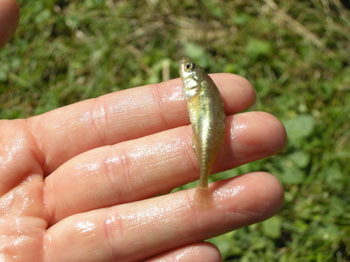
Description: Brook Stickleback has a deep, compressed body with a typical length of 38-61 mm with four to six dorsal spines on its back. This species is scale-less but has bony plates along the sides of its body. One of the main indicators to distinguish the type of stickleback is by the dorsal fin which has 9 to 11 rays.
Habitat: It inhabits the shallow edges of clear, cool ponds with vegetation cover.
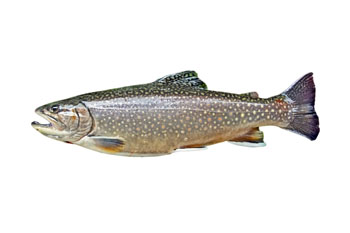
Description: Brook trout (also known as speckled trout) has coloration of olive-green, brown or black with the belly silver or white. This species has light wormlike markings and spots on dark background; some are red and blue with white leading edges on lower fins, set off by a black line. The mouth extends backwards exceeding the eye.
Habitat: It prefers clear water, as well as plenty of cover from overhanging logs, branches, and rocks. Typical habitats consist of clear, cold lakes and beaver ponds.
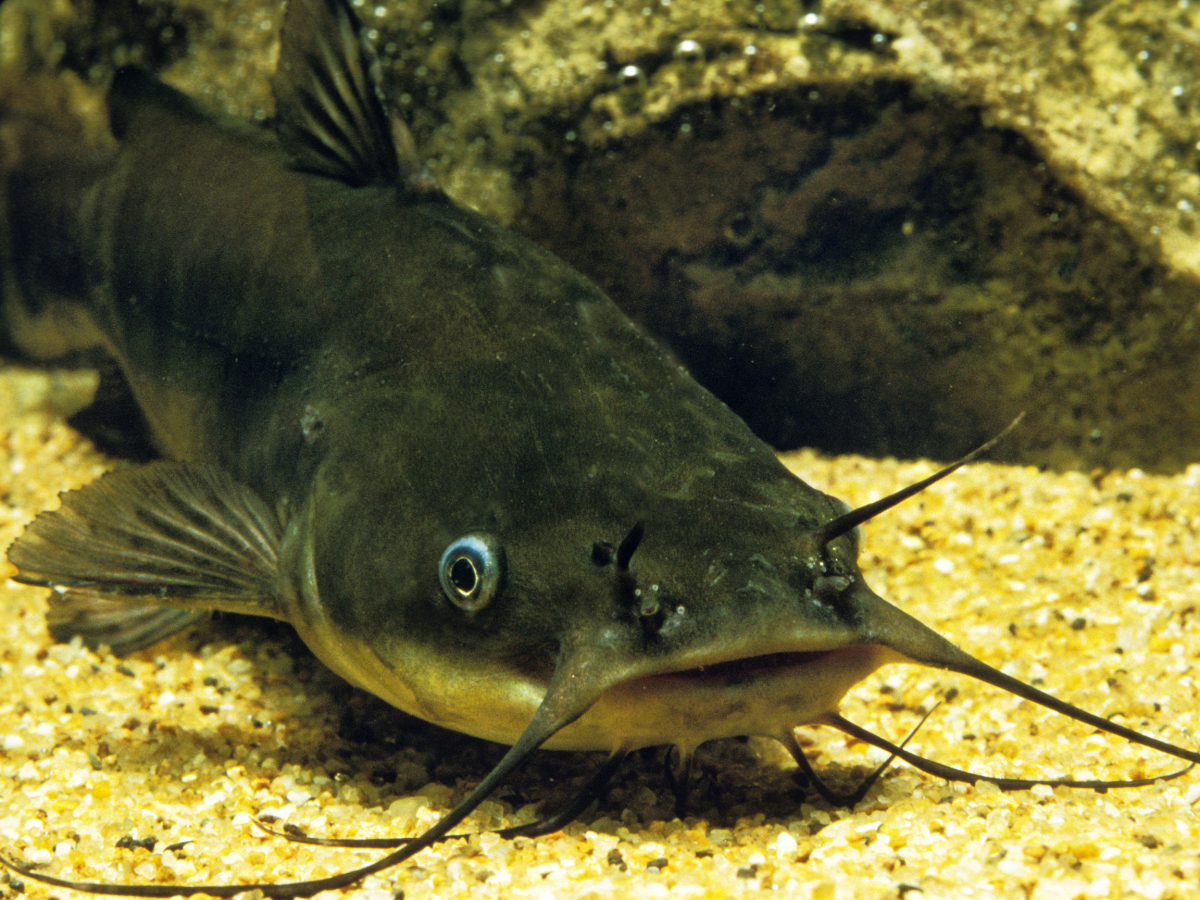
Description: Brown Bullhead, known also as barbotte, has a roundish, tapered body with black barbells (whiskers) on the chin, a dark brown back with lighter brown sides and cream coloured on the belly. The dorsal and pectoral fins have stiff spines and the skin is smooth without scales. The typical size for this species is averaging around 0.9-4.6 kg.
Habitat: Bullhead, the most common catfish in the South Nation River, is found in shallow bays and creeks in spring but move into deeper, clearer channels in summer.
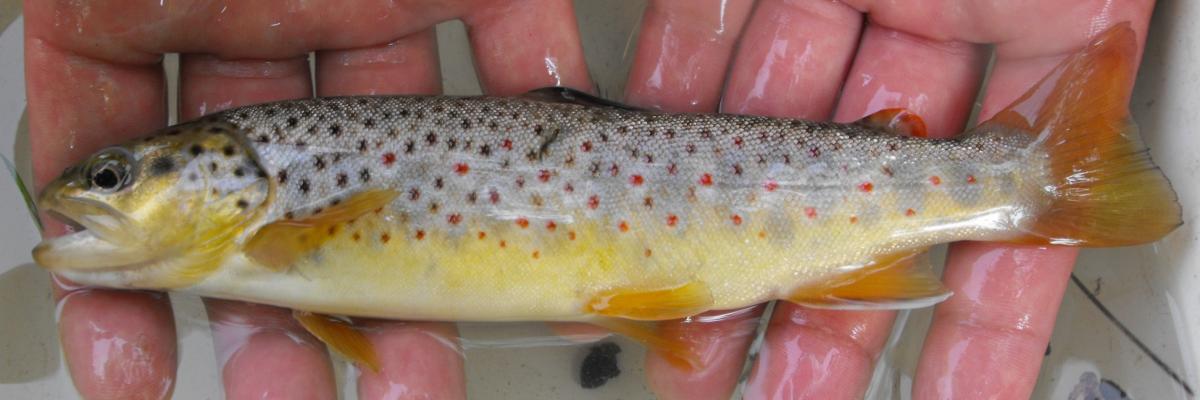
Description: Brown trout have a brown back, pale brown or silver sides with a white belly. They have large black, blue or red spots on the body, often surrounded by a lighter ring, and a tail with few spots. This is the only trout with orange on the adipose fin.
Habitat: This trout prefers pools or ponds in streams.
Description: Burbot has very small and invisible scales, two dorsal fins, a rounded tail, and a long chin barbell. The colouration is brown with dark brown mottling on the sides. This species’ typical size can range from 15-36 in.
Habitat: Burbot prefer large, cold rivers, lakes, and reservoirs.
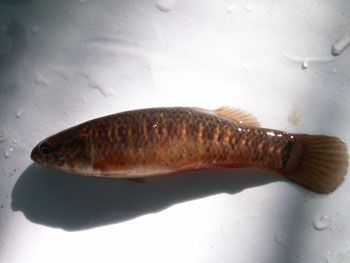
Description:Central Mudminnow is a small fish with a rounded tail.The colouration is mottled with multiple shades of brown and a black vertical bar just in front of the tail. The typical size for an adult can range between 50 to 115 mm.
Habitat:It is found in swamps, marshes, bogs, and slow-moving streams. Its habitat must contain an abundance of aquatic vegetation and a soft bed composed of organic muck and debris free, yellow clay, and silt.
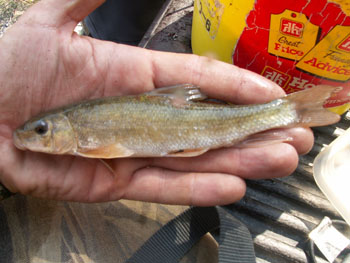
Description: This species has a hard ridge along the edge of its lower jaw and some speckling on its sides. The Central Stoneroller’s length averages 190 mm.
Habitat: The preference is in small to medium sized streams with moderate current and rock bottoms with filamentous algae present.
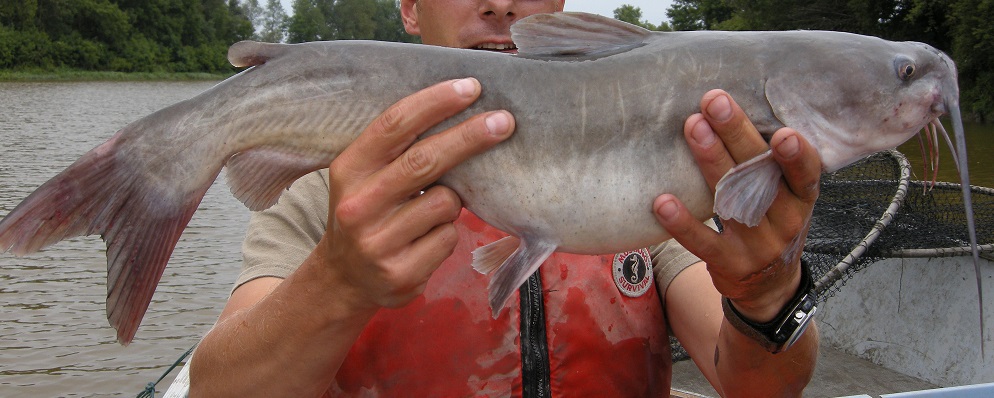
Description: Channel catfish are similar in shape but much larger than a bullhead. It has a long, tapered body with a large head and barbells (whiskers) on the chin, black back shading to silver-grey on the sides, scale-less skin, and a deeply forked tail.
Habitat: It is found close to shore in spring, but seek clearer, cooler waters in mid-river or below dams and rapids in summer.
Description:Channel Darter has a slender, elongated, blunt snout, 9-10 horizontally oblong black blotches along its side, and black X’s and W’s on its back and upper side. This species’ typical size can reach up to 61 mm.
Habitat: It is found inriffles and pools of small to medium size, usually over gravel or sand.
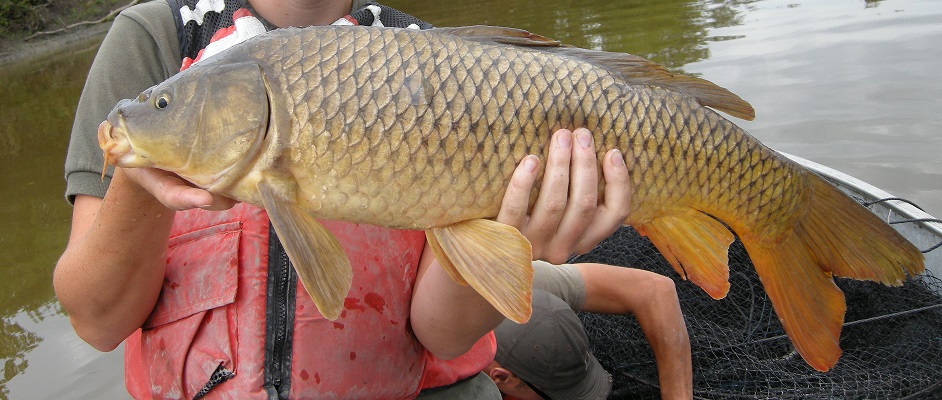
Description: Carp is noted for its large, robust size. It is easy to identify with a grey back and copper-coloured sides with large scales, and an overhanging snout with two barbells on each side of the upper jaw.
Habitat: It prefers warm, shallow water with an abundance of aquatic vegetation. Carp is most noticeable in the spring when spawning in marshes, creeks, and ditches.
Description:Common Shiner has large scales, much deeper than wide, a dark stripe along the middle of its back, and crowded scales between its head and dorsal fin. The typical size of this is 169 mm.
Habitat: This species prefers small- to medium-sized non-vegetated streams with gravel to gravel bottom, and near shore of lakes.
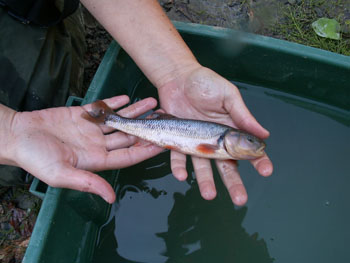
Description: This species has a large black spot at the front of its dorsal fin base, a black caudal spot, and a black stripe along its side around its snout and onto its upper lip. This species can reach a maximum of 240 mm.
Habitat: Creek Chub are found in small, clear, streams; near shores of small lakes.
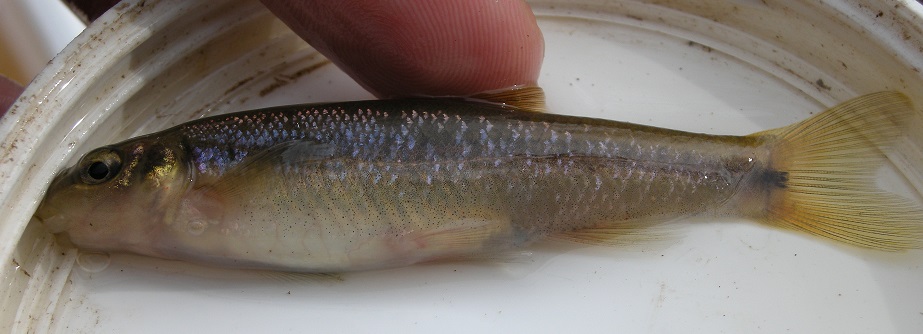
Description: Cutlip Minnow has a fleshy lobe on each side of its lower jaw. This species can reach a maximum of 157 mm.
Habitat: This minnow dwells inclear, warm, gravel streams and rivers with no vegetation and silts.
Description: Eastern Blacknose Dace has a thin barbell in the corner of its mouth; no groove separating its snout from its upper lip; a pointed snout slightly overhanging its mouth; and a stripe along its side, through eye and onto snout. This species typical sizeis 58 mm.
Habitat: Eastern Blacknose Dace live in small, cool streams.
Description:Eastern Silvery Minnow has a small, slightly rounded snout with a deep body, and is widest in front of its dorsal fin. This species can reach up to a maximum length of 120 mm.
Habitat: This species is found in backwaters and pools of streams with sandy beds.
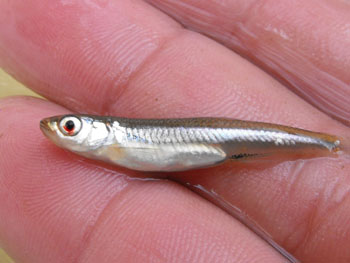
Description: Emerald Shiner has a slender, elongated body, with a large black mouth on a pointed snout, and a dorsal fin behind the pelvic fin. The typical size of this shiner is 124 mm.
Habitat: This shiner lives in pools and medium size streams and lakes.
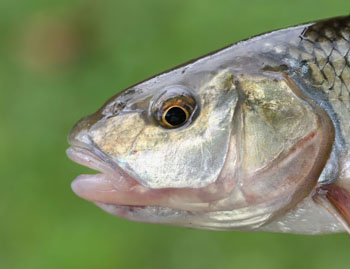
Description: Fallfish is a small fish with a thick barbell in its groove above the corner of its mouth, and scales on the back and upper side are darkly outlined. The typical size of this is 420 mm.
Habitat: Fallfish dwell inflowing, clear, gravel-bottomed streams and lakes.
Description: Fathead Minnow has crowded scales between the dorsal fin and head, and a blunt snout with a slanted mouth. Its average size is 73 mm.
Habitat: These minnows live in a wide range of habitats, but prefer still waters.
Description: Finescale Dace has very small scales, a large mouth extending to under its eye, and a single black stripe along its side. The typical size of this species is up to 80 mm.
Habitat: Finescale dace live insmall, boggy lakes and streams that are cool and tea-stained.
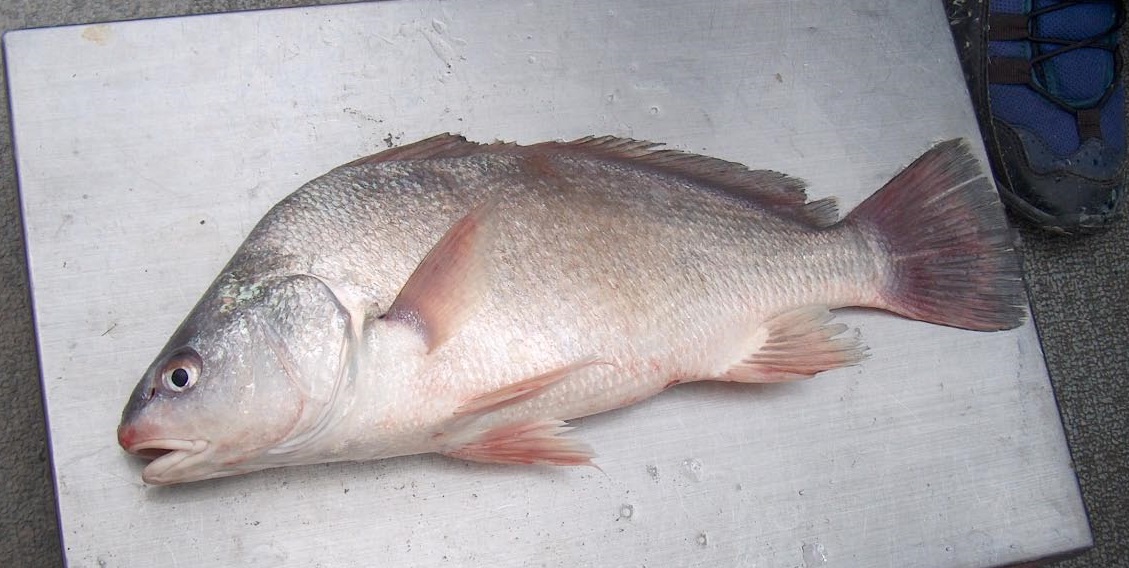
Description: Freshwater Drum are silver-gray with a sub-terminal mouth (ending below the tip of its snout). It has a deep body and rounded tail. This species typical size ranges from 45 to 50 (18 to 20 in).
Habitat: It is found inlarge, shallow water bodies with sand- or mud-lined bottoms.
Description: Golden Shiner is a small fish with an upturned mouth, deep body and a scale-less belly. This species can reach up to 211 mm in length.
Habitat: This shiner lives in theweedy, clear waters of lakes and streams.
Description: Greater Redhorse has thick lips with grooves that are parallel, large scales, and a red caudal fin. This species typical size is 673 mm.
Habitat: It dwells inlarge streams and riffles with clean gravel, sand, or boulders.
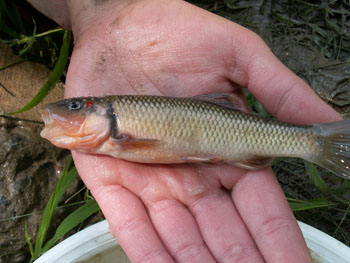
Description: Hornyhead chub has a thin barbell at the corner of its mouth, large dark-edged scales, and a spot on the base of its tail.It can reach up to 188 mm in length.
Habitat: This species lives in medium-size clear streams with gravel bottoms.
Description: Iowa Darter has a slender, elongated body with a small mouth,black teardrop spots, and a middle red band on its first dorsal fin. This species typical length is 58 mm.
Habitat: It is supported instanding, clear or slowly moving waters of streams, rivers and lakes with vegetation and organic debris and sand.
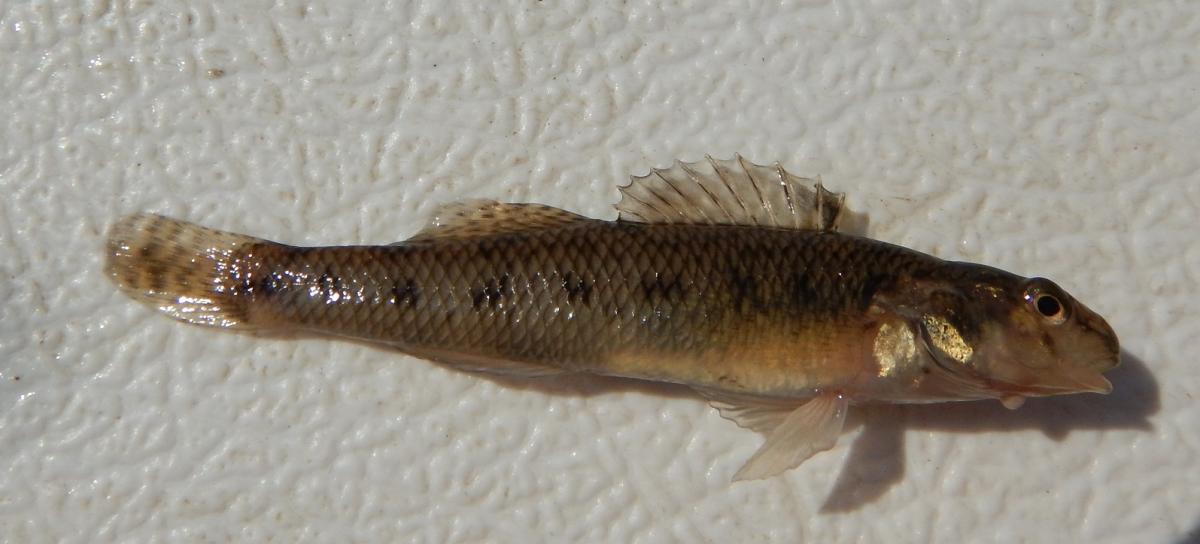
Description: Johnny Darter has a slender, elongated body, with a small mouth, black teardrop spots, and dark brown X’s and W’s along its side. This species typical length is 60 mm.
Habitat:A wide variety of aquatic habitats support Johnny Dater, but most it is most commonly found in bodies with sand, silt, or gravel bottoms.
Description: Lake Sturgeon is typically quite large with a torpedo-shaped body, and varies in colour depending on age, from a uniform grey to a grey-brown, and even some green. The Lake Sturgeon has a sharp, cone-shaped mouth with four barbells (whiskers). Interestingly, Lake Sturgeon does not have scales but leathery skin, and five rows of bony plates, called scutes. The typical length of an adult ranges 3-5 feet.
Habitat: This species is a cold-water fish found usually in shoal areas of large rivers and lakes, and generally lives in shallower waters (less than 30 feet deep).
Description: Largemouth Bass have dark-green backs blending into lighter green sides with a broad horizontal band of irregular black patches. A large jaw extends beyond the eye. The typical weight for this species is 0.9-2.3 kg.
Habitat: Largemouth, abundant in the South Nation River, prefers warm, shallow backwaters with a profusion of weed beds, lily pads, and logs.
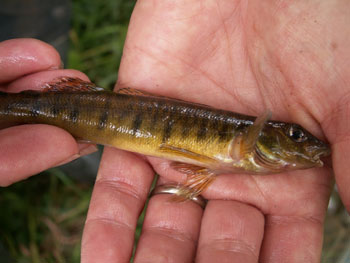
Description: Logperch has a slender, elongated body with a large mouth. Its colouration is light brown with dusky tear drops, with many alternating long and short bars alongside. This species can reach up to 150 mm long.
Habitat: Logperch live inmedium to large streams, lakes, and rivers over gravel or sand bottoms.
Description: Longnose Dace is a minnow that has a thin barbell in the corner of its mouth with no groove separating its snout from its upper lip, and a long snout extends beyond its mouth. This species can reach up to 118 mm in length.
Habitat: Longnose Dace live instreams with gravel beds, sometimes in inshore waters of lakes.
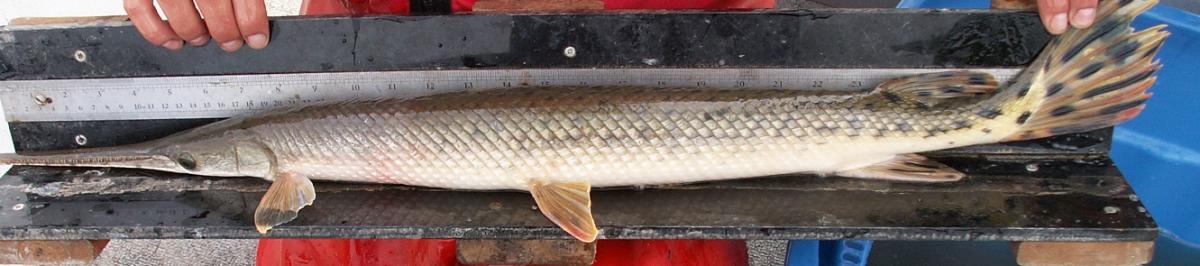
Description: Longnose Gar is long and cylindrical, with a small head featuring a long, narrow jaw twice the length of the head, many needle-like teeth, and a dorsal fin placed near its tail. Its colouration is olive to brown with a white belly, and may have spots on its sides, fins and tail. Young fish have a blackish lateral band. The average size for females is 51 to 126 cm; and males 44 to 103 cm.
Habitat: This species prefers warm, shallow areas with weak to no current, including vegetated bays and other backwaters.
Description: Mimic Shiner has a lateral band which is weakly pigmented, and black pigment surrounding the anus. This species typical length is 76 mm.
Habitat: Still or quiet waters of lakes or streams support this type of Shiner.
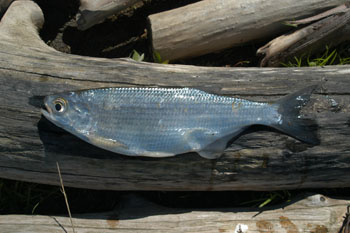
Description: The key identifying characteristics of this species are the iris of its eye is large and golden, but aren’t as bright as a Goldeye (Hiodon alosoides). Its scales are silver and the typical size ranges 25-30 cm.
Habitat: The distribution of the Mooneye can be found in clear rivers and shallow lake waters, in southern and parts of northeastern and northwestern Ontario.
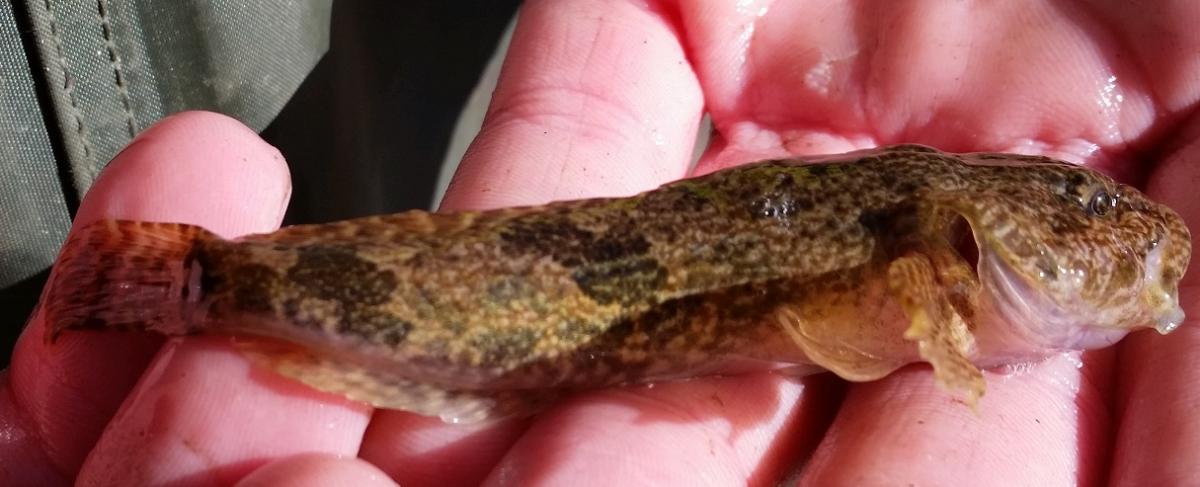
Description: Mottled Sculpin and other sculpin species have no scales, and its eyes are positioned on top of its rather large head. The way to tell mottled sculpin apart from other sculpin is the 3-4 dark saddles going over its back and down its sides. It has a mottled colour pattern of various shades of black, gray, and brown, with a lighter, cream-coloured belly. Another key identifying feature is a dark vertical bar at the base of its tail. The typical size ranges 75-90 mm.
Habitat: It is generally found in rocky rubble, gravel substrates with swift waters of creeks, headwaters, and small rivers.
Description: Muskellunge (muskie) has a similar shape to pike but can grow much larger. Its sides are marked with dark vertical wavy bars, or sometimes spotted or clear, on a light greenish background. The typical weight ranges 0.9-2.7 kg.
Habitat: It is often found around weed lines, shoals, and edges of deeper channels.
Description: Northern Hog Sucker has thick lips with “pimples,” large scales, a large rectangular head, and three to six dusky-brown saddles on its upper side. This species can reach up to 610 mm long.
Habitat: It prefers riffles and pools of clear shallow streams with rubble to gravel substrate.
Description: Northern Pearl Dace has very small scales and mouth, a barbell in the groove above its lip, and many small black and brown specks on the silver side. This species can reach up to 132 mm long.
Habitat: This Dace is found in ponds, streams and small lakes with gravel or sand bottoms.
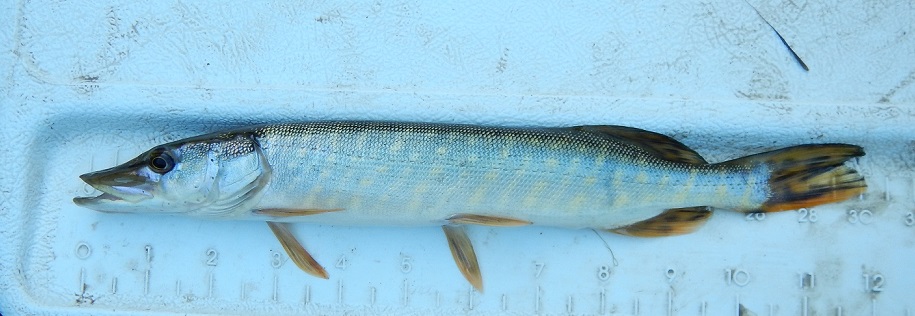
Description: Northern Pike has an elongated body, a dark green back with white oval rings on greenish sides, and a white belly. A large protruding jaw is studded with needle-sharp teeth.
Habitat: This pike is widespread in shallow, warmer waters.
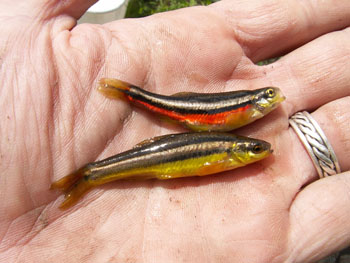
Description: Northern Redbelly Dace has very small scales and mouth with two black stripes along its side, with a reddish colour below. This species is typically 61 mm long.
Habitat: This Daces lives inponds, boggy streams, and small lakes over a bottom of vegetation or organic muck.
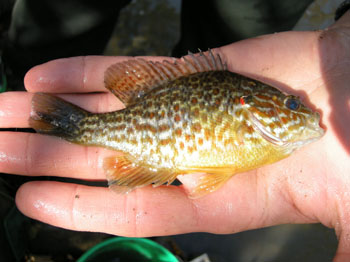
Description: Pumpkinseed, better known as sunfish, has a flat, deep body with a greenish-olive back, orange-yellow sides with reddish blotches, wavy blue streaks on the cheeks, and a red spot on the gill flap.
Habitat: It likes shallow sheltered shorelines, and boat docks and bays with patches of weed and brush.
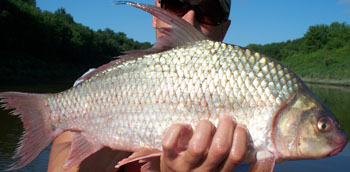
Description: Quillback is a very flattened fish when viewed from the side. The colouration of its scales is silvery. It is distinguished from other species of carp suckers by its long first dorsal ray and deeply forked tail fin.
Habitat: Quillback are found in productive streams that are moderately clear and deep.
Description: Redfin Shiner has very small scales and a dark spot in front of its dorsal fin. This species typical size is 81 mm long.
Habitat: This type of Shiner lives in creeks and medium–size rivers with some vegetation.
Description: River Red horse is a sucker similar to the White Sucker, but has red-tipped fins. The mouth under its snout has thick lips with grooves, large scales, and a straight dorsal fin edge. It is a prominent snout bottom-feeder that dines on a variety of prey, including mollusks. Its typical length is 617 mm.
Habitat: This species is found in clear, large creeks and rivers, though it is sometimes also found in lakes.
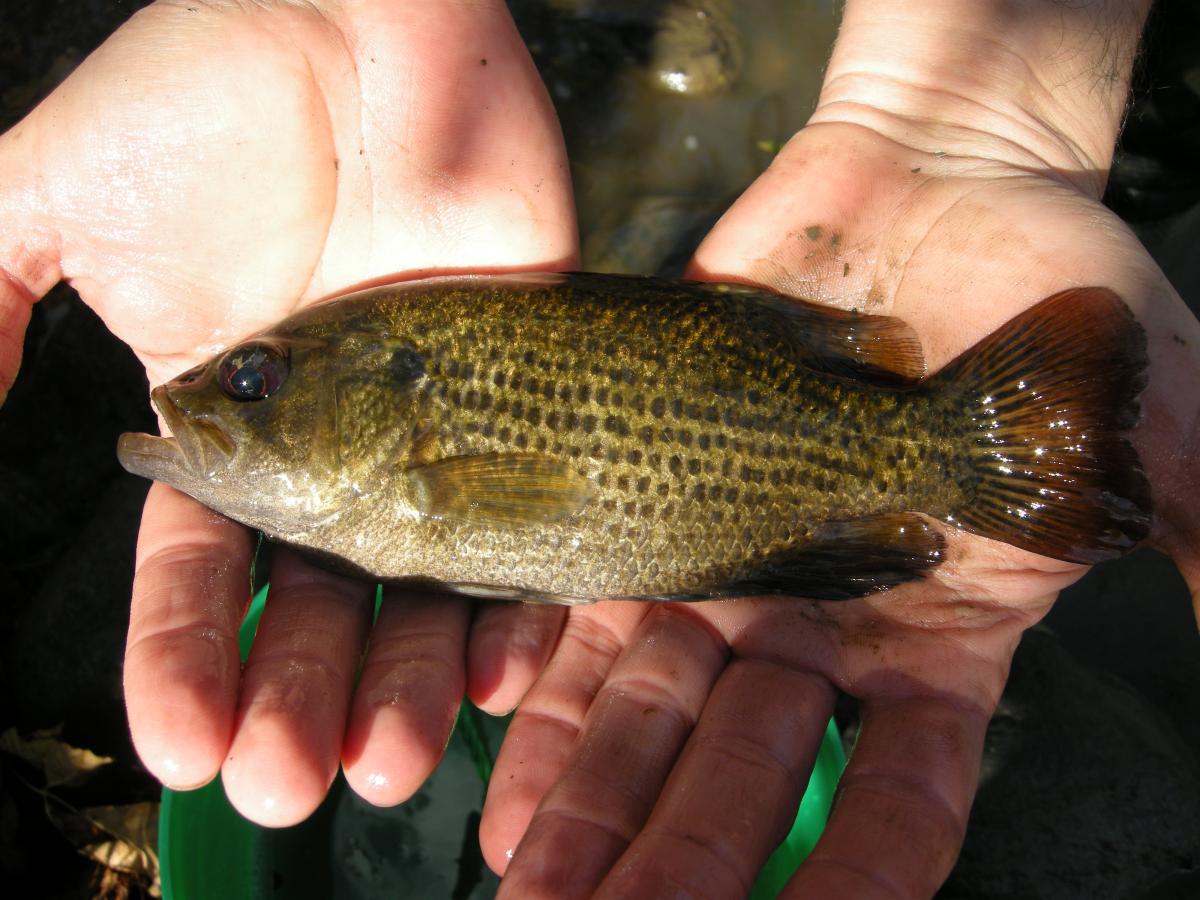
Description: Rock Bass has a short, chunky body with brownish-green sides marked by dark spots forming horizontal rows, and large, reddish eyes. This species length ranges 15-20 cm.
Habitat: This type of bass is abundant around docks, locks, and shorelines.
Description: Rosyface Shiner has a slender, elongated body with a dorsal fin well behind the pelvic fin area. The colouration appears to be faint red at the base of its dorsal fin. This species can reach up to 92 mm.
Habitat: This type of Shiner is found in fast-flowing, small- to medium-size streams with rubble or gravel.
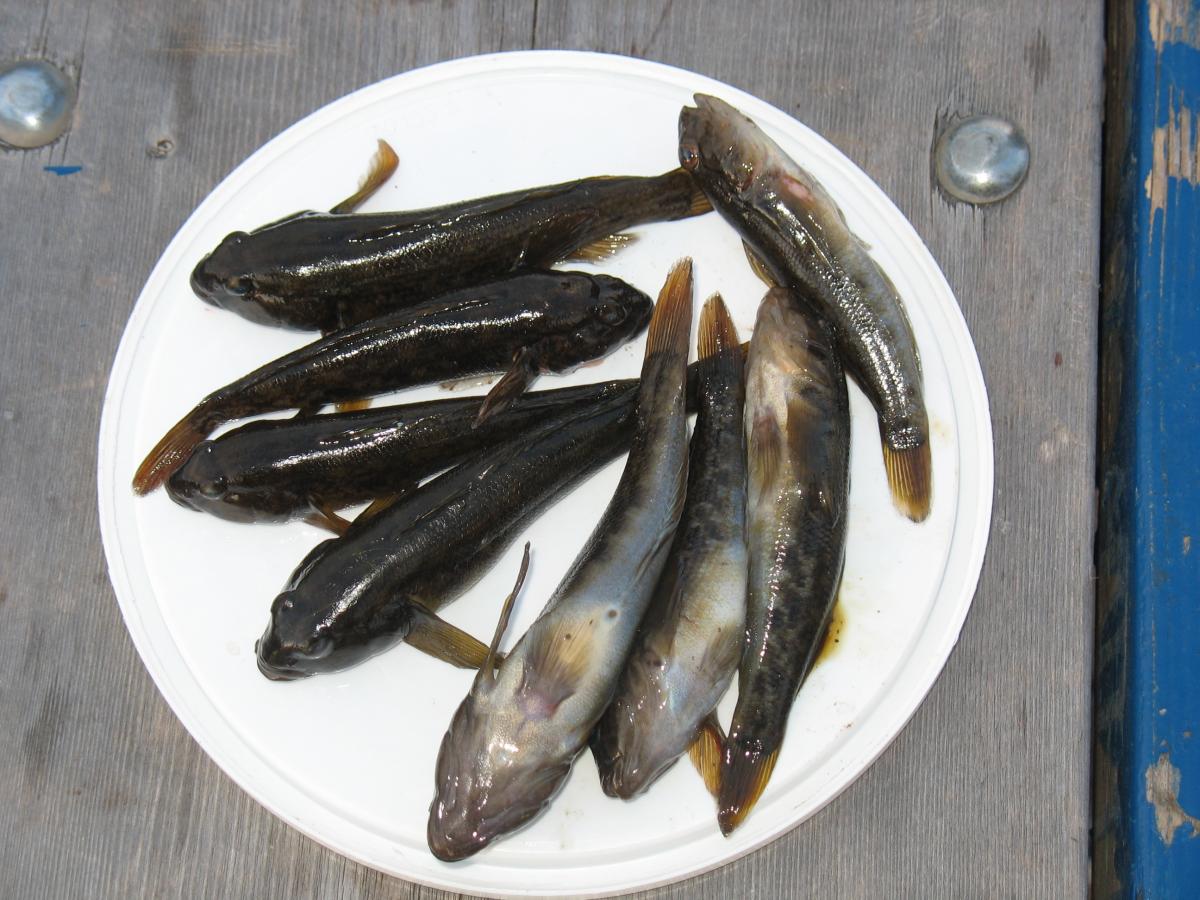
Description: Round Goby is a small, bottom-dwelling species that can be distinguished by its dorsal fin tinged in green with a black spot; frog-like raised eyes; thick lips; and single scallop-shaped pelvic fin. The colouration of this species is mottled brown (a spawning male is black). Round Goby is an invasive alien species, which means it is a threat to North America’s aquatic ecosystems. If you find this species in the SNC watershed, please report it to the Invading Species Hotline: 1-800-563-7711.
Habitat: This fish prefers habitat near shore, with rocky, sand bottoms, but it is not limited to these habitats.
Description: Sand Shiner has a lateral band which is weakly pigmented. This species’ typical length is 81 mm.
Habitat: This Shiner dwells in shallow water of small- to large-size lakes and rivers, with some rooted aquatic vegetation.
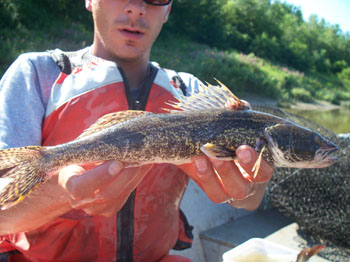
Description: Sauger has an elongated body, and a large mouth that extends back to the eye. Its colour varies from grey to brown, and is lighter on its sides, possibly with distinct bands or blotches, and a white belly. Its two dorsal fins are spotted.
Habitat: Sauger is found in habitats similar to Walleye, preferring cover such as weed, rock, and wood.
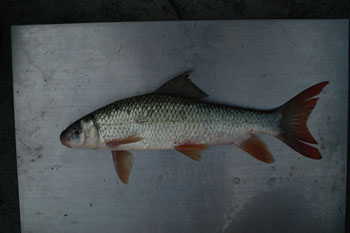
Description: Shorthead Redhorse has thick lips with grooves, and its lower lip is notched. It has large scales, a red caudal fin, and a concave dorsal fin. This species is 620 mm on average.
Habitat: This species lives instreams and lakes with a bottom of gravel or sand without heavy silt.
Description: Silver Redhorse has thick lips, with grooves or “pimples” on its mouth and under its snout. It is also characterized by large scales, a gray caudal fin, a convex dorsal fin, and a notched lower lip. This species’ typical length is 635 mm.
Habitat: It is found in rock and mud bottom pools and runs of streams, and sometimes lakes.
Description: Slimy Sculpin has a broad flattened head, thin body, and expansive wing-like pectoral fins. The colouration is mottled brown to gray on the back and sides, with a whitish belly. Dark cross-bands are occasionally present on its sides. Often there are two dark, oblique saddle marks, one under each of the posterior and anterior portions of the second dorsal fin. The length of this species ranges 2-3 in.
Habitat: Slimy Sculpin occupies rocky or gravely streams and lake bottoms, darting swiftly from place to place when disturbed.
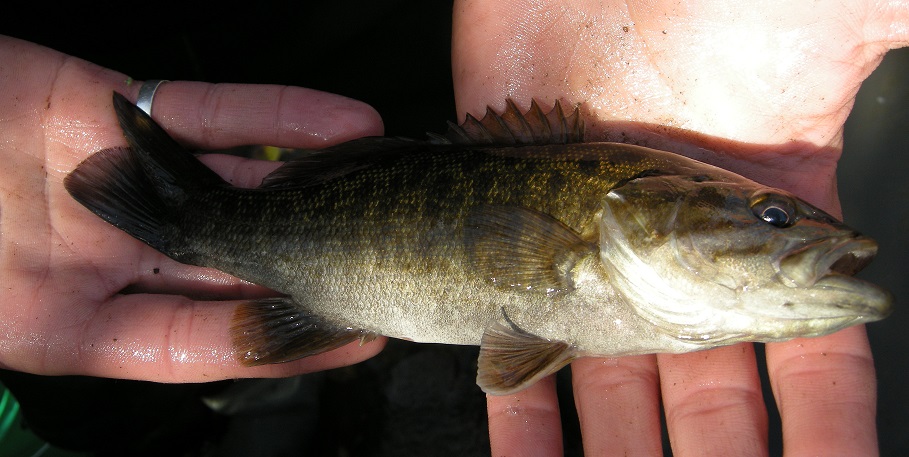
Description: Smallmouth Bass has a deep, compressed body, with a bronze back and greenish-brown sides that feature irregular bars fading into an off-white belly. Its jaw extends back to its reddish eyes. The typical weight of this species ranges 0.5-1.8 kg.
Habitat: This bass is commonly found throughout the South Nation River. In early summer, it dwells over hard bottoms, close to shore and moves into weed beds, boating channels, sandbars, and rocky bottoms as water temperatures rise.
Description: Spotfin Shiner has scales on its side, with a diamond-shaped, dusky to black bar on its chin, and a black spot on the rear half of its dorsal fin. This species’ typical length is 120 mm.
Habitat: This Shiner species lives in medium- to large-size streams, with vegetated streams over rubble, sand, and gravel.
Description: Spottail Shiner has a rounded snout over hanging its mouth, no barbell and a large, black caudal spot. This species typically reaches 137 mm long.
Habitat: This type of Shiner lives in large lakes and streams generally over rocky or sandy shallows with vegetation.
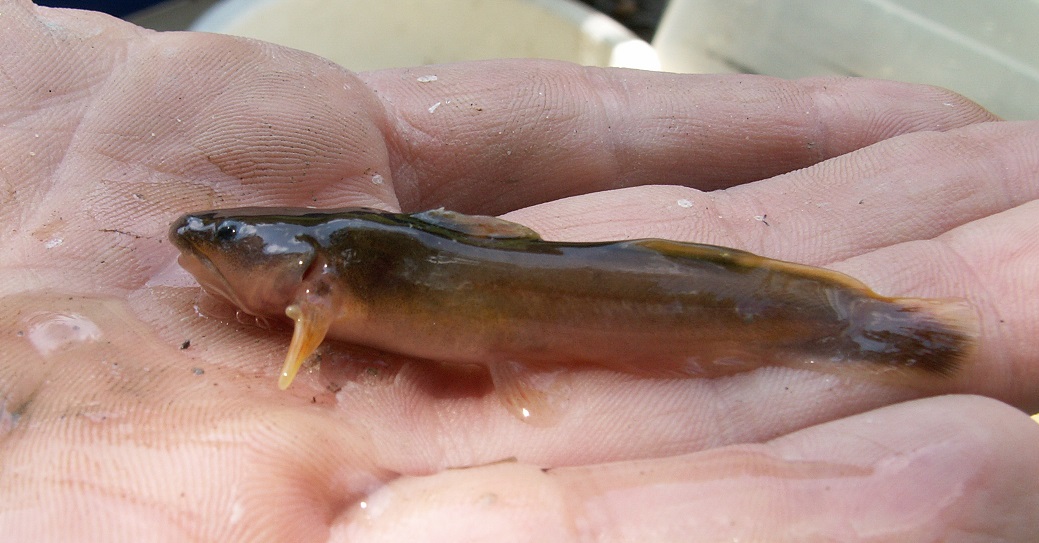
Description: The Stonecat is a small, flat-headed, slender catfish, with an upper jaw protruding beyond its lower jaw. The colouration of this species can vary in shades of brown, with a lighter cream or white belly, and a dorsal fin with a shallow notch.
Habitat: It is found in small rivers and larger creeks. It prefers fast-moving riffle areas with rocky substrates. It spends most of its life in shallow riffles, but can be found in deeper water.
Description: Tadpole Madtom colouration can be in various shades of brown or yellow. Its adipose fin is completely connected to its tail, which gives a large rounded tadpole-like appearance. The word “Madtom” refers to the catfish’s poisonous spines. The typical Madtom will grow to about 115 mm.
Habitat: This species is attracted to submerged vegetation and other types of plant debris. It lives in shallow water that can be turbid (cloudy).
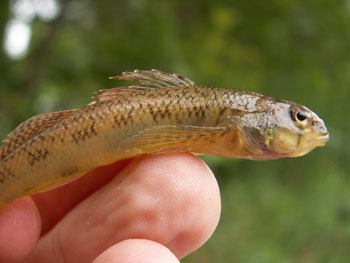
Description: Tessellated Darter has a slender, elongated body, and a small mouth. The colouration is light brown with black teardrops, dark brown X’s and W’s alongside and six dark brown saddles. The typical length is 88 mm.
Habitat: This Darter is found in rivers and lakes over sand, rock, and mud beds.
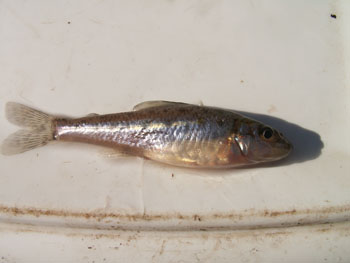
Description: Trout-Perch, as the name suggests, shares characteristics of both trout and perch. The fish has a large un-scaled head; adipose fin; spines in its dorsal, anal, and pelvic fin; and rows of 7-12 dusky spots along its back. This species can reach up to 123 mm long.
Habitat: Trout-Perch are attracted to water areas with a sandy bottom.
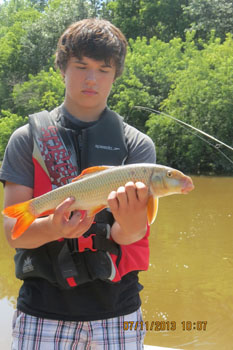
Description: Walleye, also known as pickerel or dore, has an elongated body with bulging, glassy eyes; an olive-brown back; yellowish sides that fade into a white belly; and a white band on the lower tip of its tail. As in all members of the perch family, walleye has two distinct dorsal fins with the first being spiny-rayed and the second, soft-rayed. The species eyes possess a silvery reflection, making them appear blind or ‘wall-eyed.’
Habitat: They are often found below dams and rapids.
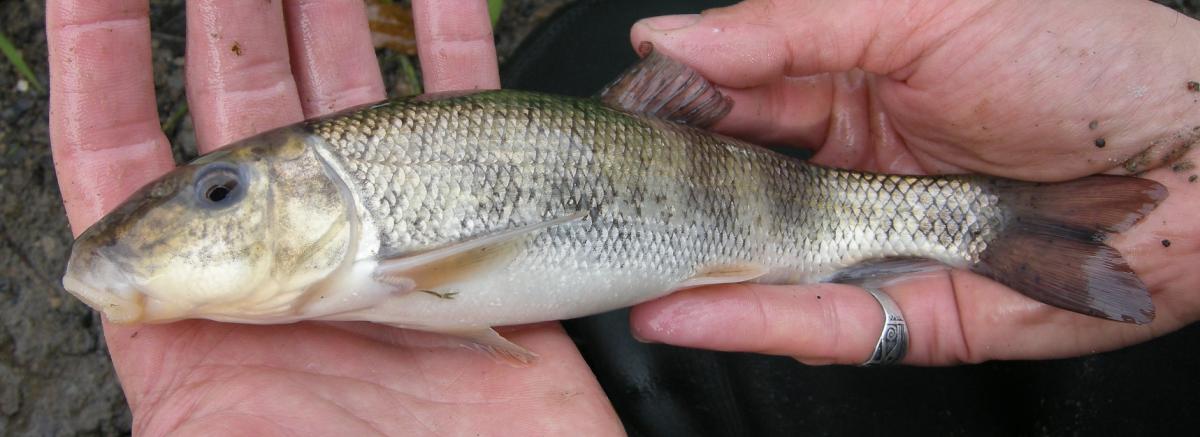
Description: Common White Sucker, also known as mullet, has a round, elongated body; a pronounced, turned down mouth; and a blackish back with silver sides. The typical weight of this species is 0.4-0.9 kg.
Habitat: It spawns in spring on clear, gravelly bottoms of creeks and streams, but in summer prefers the edges of river holes.
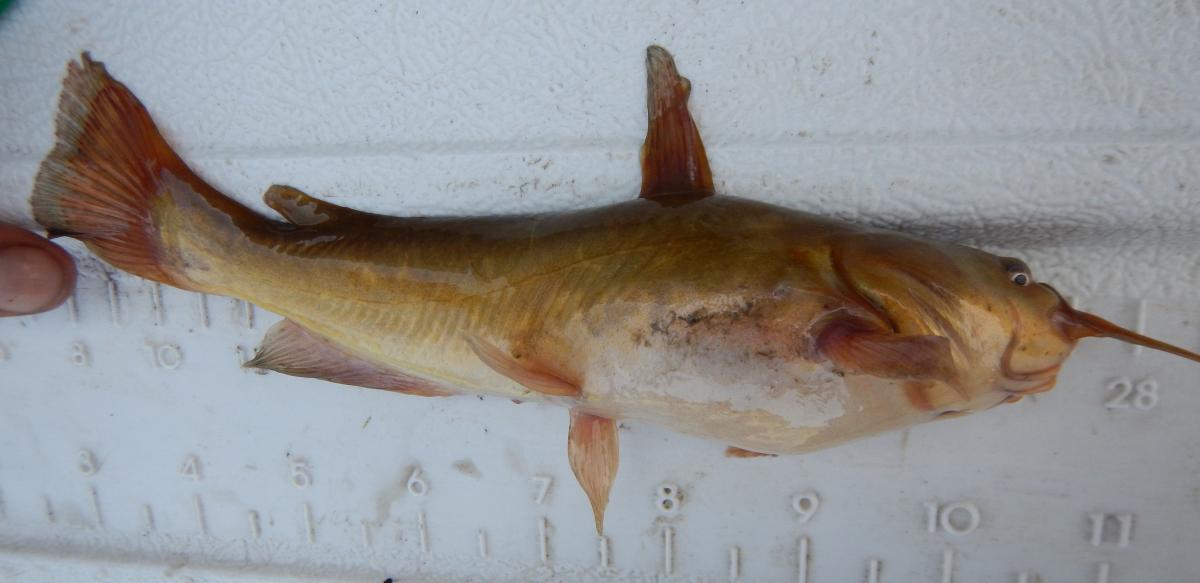
Description: The Yellow Bullhead is light yellow to olive-green on the back, with a yellowish to white belly, and white barbells. Its tail is not notched and is slightly rounded.
Habitat: It is a bottom dweller which prefers river pools, backwaters, and small to large rivers; shallow portions of ponds; and lakes with sand, muck or clay substrates.
Description: Yellow Perch has an oblong body, with a black back, and golden-yellow sides marked by dark vertical bars fading into a white belly. The typical size for a yellow perch is 15-25 cm.
Habitat: It is widely dispersed in shallow, weedy bays and around hard bottom shoals.