Special Projects
South Nation Conservation (SNC) protects and restores our watershed as a healthy, vibrant ecosystem with the support of many forward-thinking individuals, community groups, municipalities, and partner agencies.
Together, we lead a wide range of special environmental projects across our jurisdiction — from aquatic habitat improvements and shoreline restoration to research, monitoring, and stewardship initiatives that strengthen the natural systems we all depend on.
SNC’s work is guided by science, local knowledge, and an understanding of how water, land, habitats, and wildlife are deeply interconnected. Through this approach, we are able to identify priority environmental needs, set meaningful targets, monitor long-term conditions, and deliver projects that provide lasting benefits for both communities and the environment.
As a not-for-profit organization and one of Ontario’s 36 Conservation Authorities, SNC relies on external funding opportunities, grants, and partnerships that allow our expert staff to implement on-the-ground projects year after year.
If you would like more information on how you can support environmental projects with SNC, please contact us at info@nation.on.ca or consider donating to SNC here.
Featured Projects
A selection of SNC’s current and recent special projects is highlighted below, with additional details and updates available for each initiative.
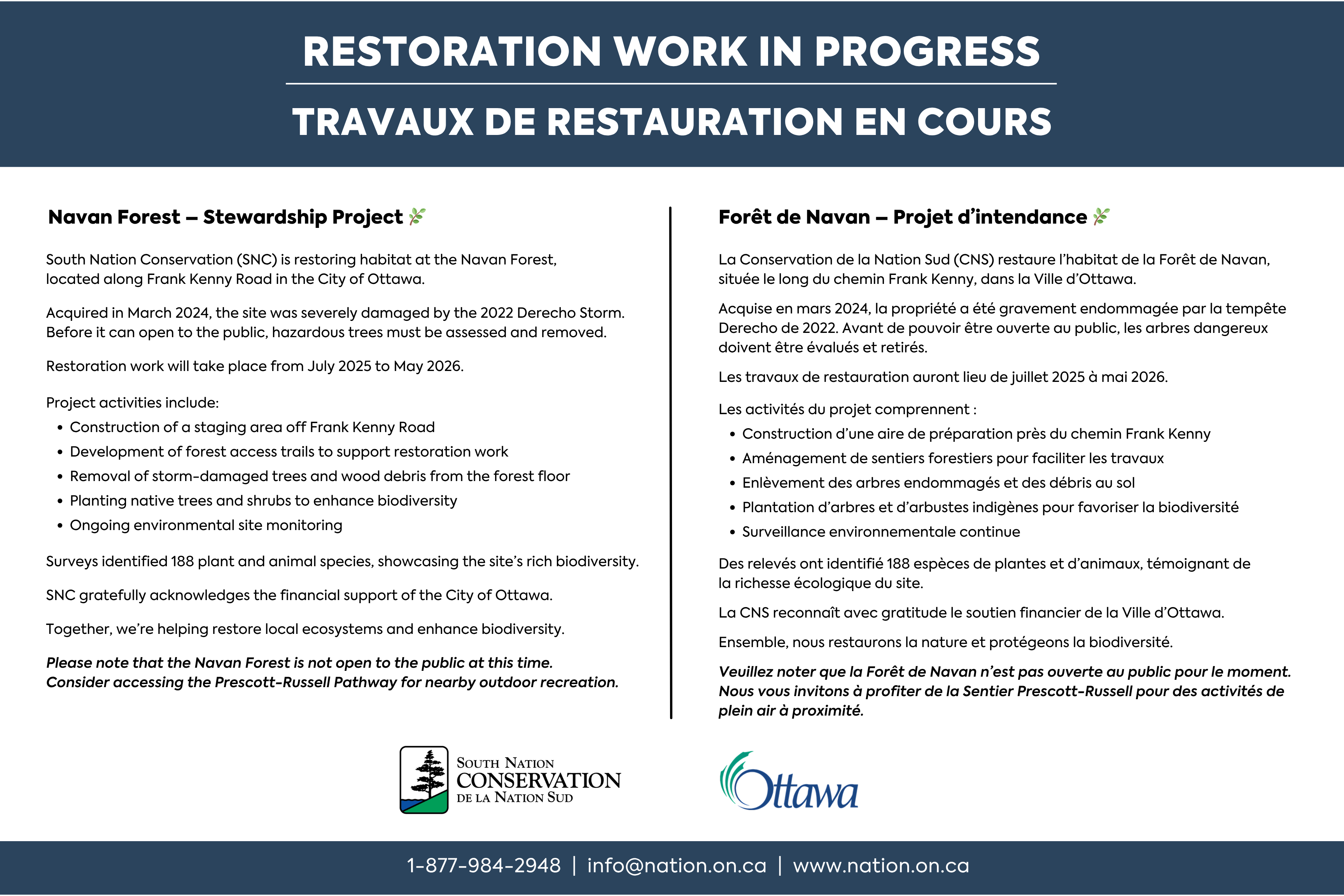
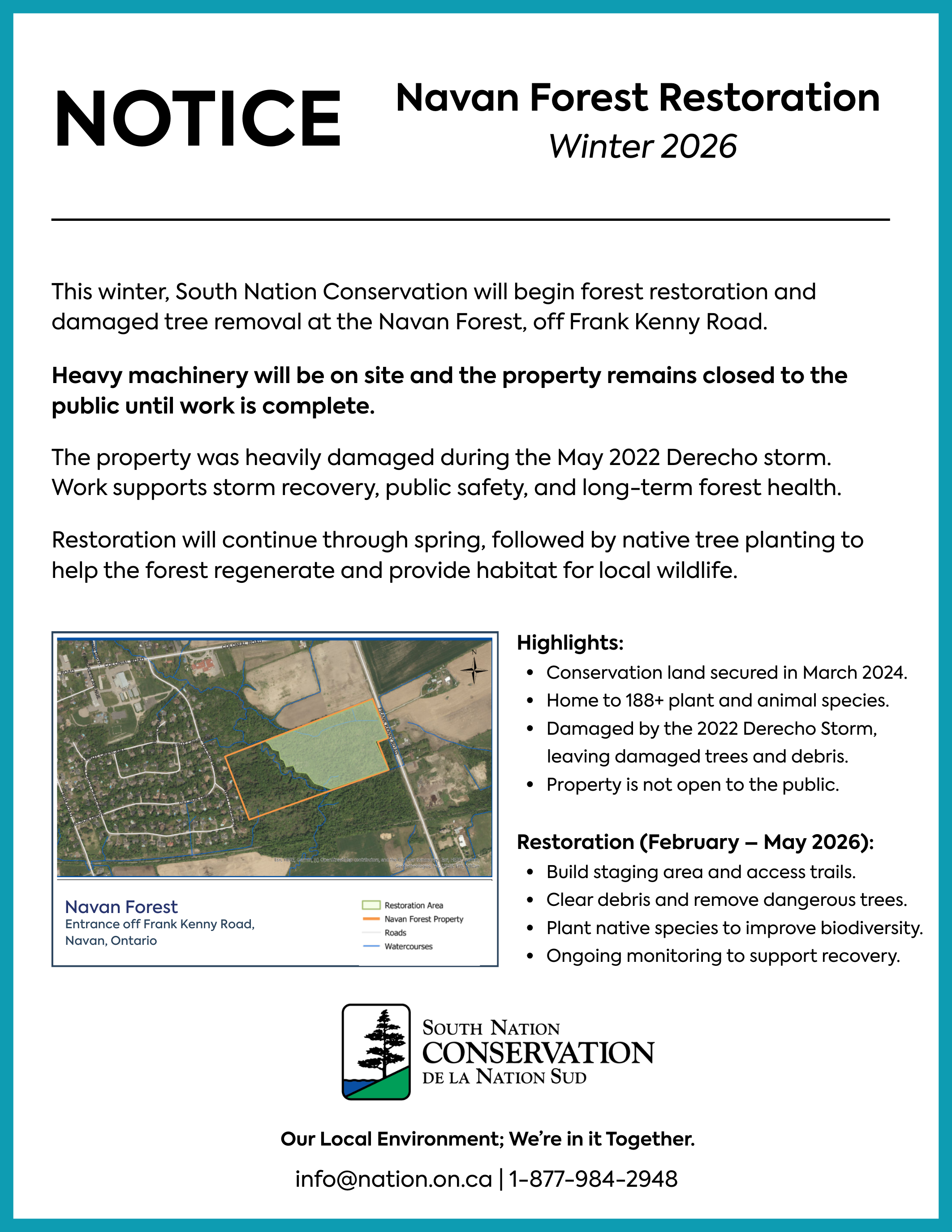
South Nation Conservation (SNC) is restoring habitat at the Navan Forest, located along Frank Kenny Road in the City of Ottawa.
The Navan Forest property was acquired by SNC in 2024 with the purpose to protect forest cover and a natural heritage feature of the
community of Navan.
The property is located on the southeast edge of the Village of Navan with frontage on Frank Kenney Road and accessible by road allowance from Barnwell Crescent in the Clarke Woods subdivision.
The property is comprised of 50 acres of natural forests and valley lands and divided east-west by a permanent, fish-bearing watercourse. The west portion of the forest is a mature, tolerant hardwoods/mixed forest and the east portion is comprised of intolerant hardwoods and lower lying swamp woodlands. An informal trail network runs throughout the property.

This restoration project focuses on the portion of the property east of the creek, which is approximately 30 acres.
Access is from the existing entrance on Frank Kenny Road.
On-site forest management work is scheduled to begin July 2025 and continue until May 2026.
The main project activities include:
- Improving the existing access and staging/parking area by the entrance off Frank Kenny Road.
- Creating an access trail around the perimeter of the project area.
- Carrying out salvage/clean-up work of hazardous and storm-damaged trees.
- Re-planting the storm damaged areas with a diversity of native trees and shrubs to improve the resiliency of the forest.

Please note: The property is currently closed to the public due to damaged and hazardous trees from the May 2022 Derecho storm and will remain closed until after the restoration work is complete. Consider accessing the Prescott-Russell Trail for nearby outdoor recreation.
Download the map here: Map - South Nation Conservation Property - Navan Forest
Updates of the restoration work will be updated on SNC's social media platforms and monthly newsletter throughout the duration of the project.
For questions related to the Navan Forest Restoration Project, please email info@nation.on.ca.
SNC is looking forward to restoring the Navan Forest and improving it's resilience, biodiversity and accessibility.
Stay connected!
Follow SNC's Facebook page here.
Sign up for SNC's Monthly Newsletter, The South Nation Current here.
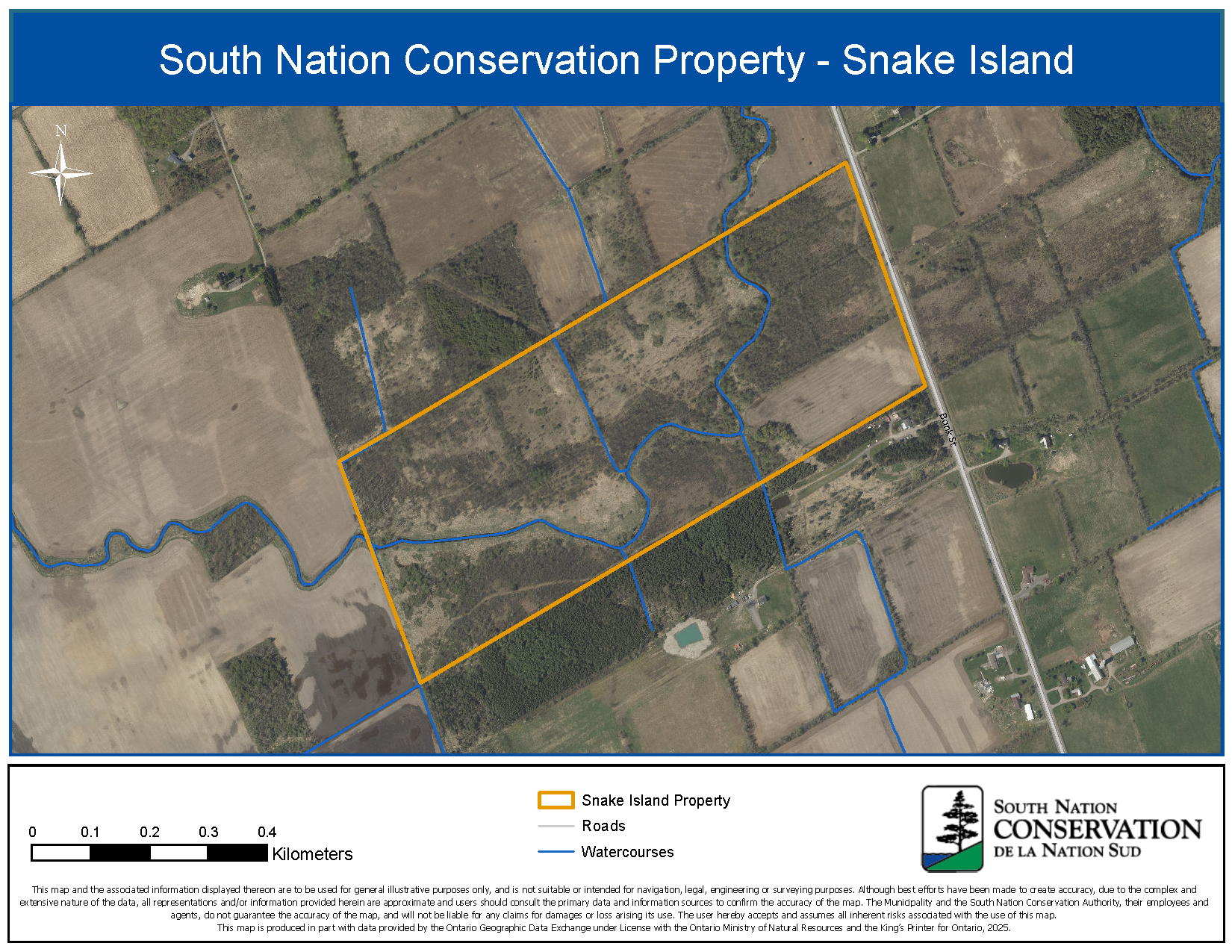
South Nation Conservation (SNC) is restoring wetland, pollinator, and forest habitats at Snake Island Forest as part of a three-year
environmental stewardship project (2025-2027).
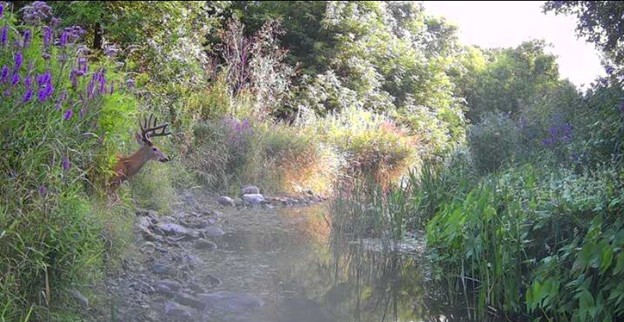
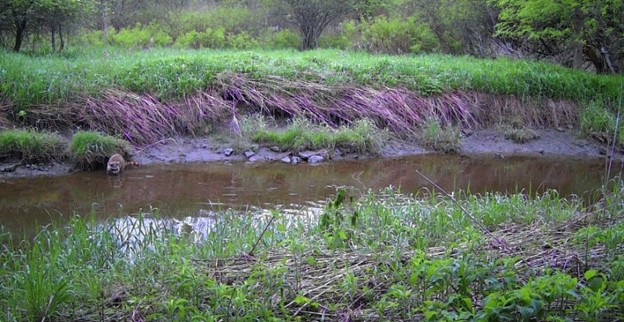
Project activities include:
• Removal of dead ash trees and invasive buckthorn shrubs
• Maintenance and enhancement of the pollinator meadow
• Ongoing wildlife monitoring to guide conservation efforts
• Planting of native trees and shrubs
• Excavation of new wildlife ponds
Please note: Heavy machinery will be on-site during construction phases.
Some areas may be temporarily closed for public safety.
SNC gratefully acknowledges the financial support from the City of Ottawa and the Canadian Wildlife Federation.
Together, we’re helping restore local ecosystems and enhance biodiversity.
Leitrim Wetland
The Leitrim Wetland is a Provincially Significant Wetland and Area of Natural and Scientific Interest, surrounded by urban development, in the Findlay Creek community in the City of Ottawa.
The wetland is managed by South Nation Conservation (SNC) in partnership with the developers Tartan and Tamarack Homes and the City of Ottawa.
Stewardship and monitoring activies are reported to the Leitrim Wetland Advisory Committee which was established in 2001 and consists of community, developer, and environmental agency representatives.
Learn more about the Leitrim Wetland here.
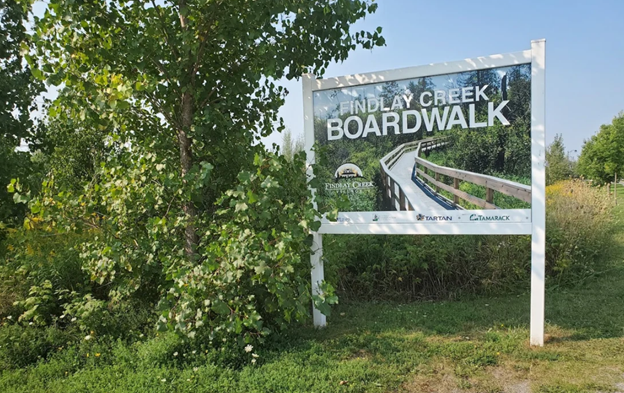
Findlay Creek Boardwalk
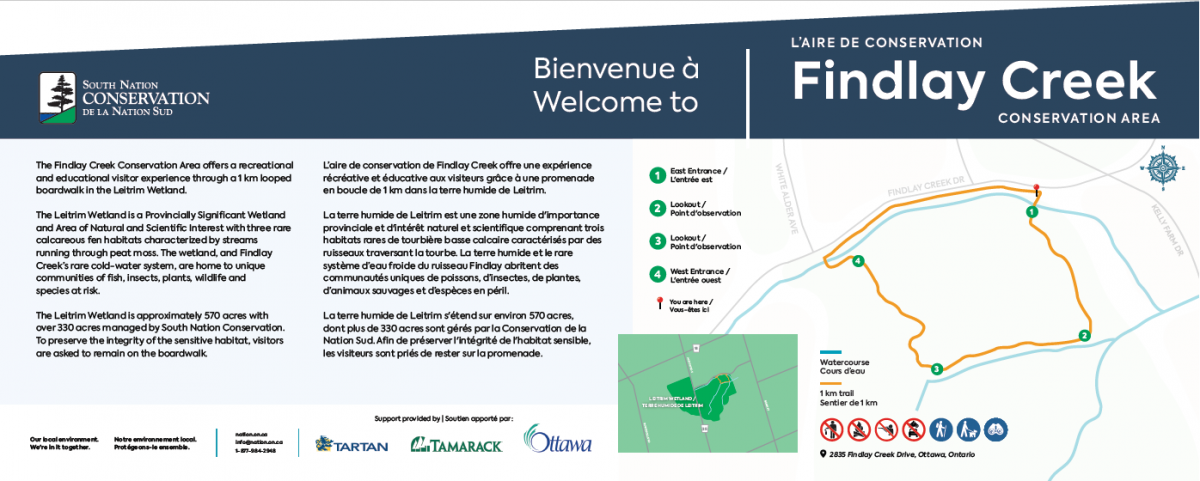
The development of a recreational and educational asset was included in the Leitrim Wetland Stewardship Agreement, established in 2004, to inform the future management and stewardship of this important natural ecosystem. This included building an accessible looped boardwalk network and a place of educational interpretation within the community.
SNC created the existing boardwalk in 2012 and has been fundraising to complete the looped trail network, in consultation with Leitrim Wetland Advisory Committee, since that time.
Findlay Creek Boardwalk Extension
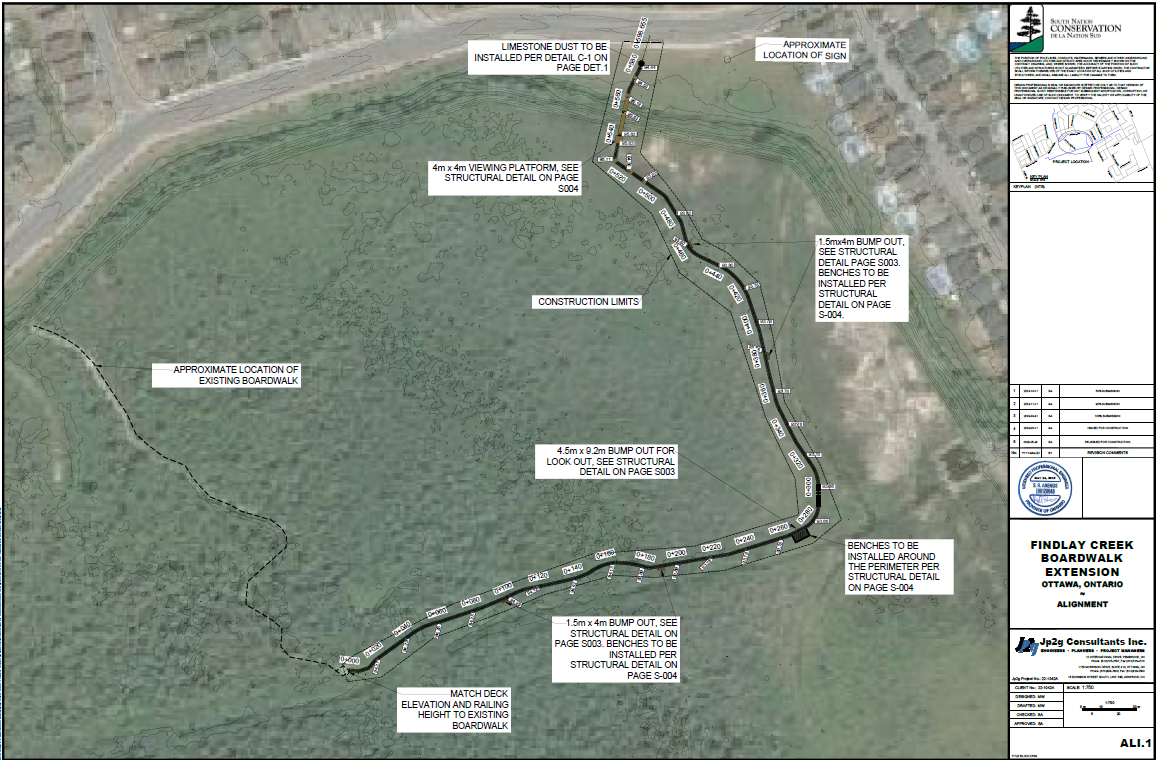
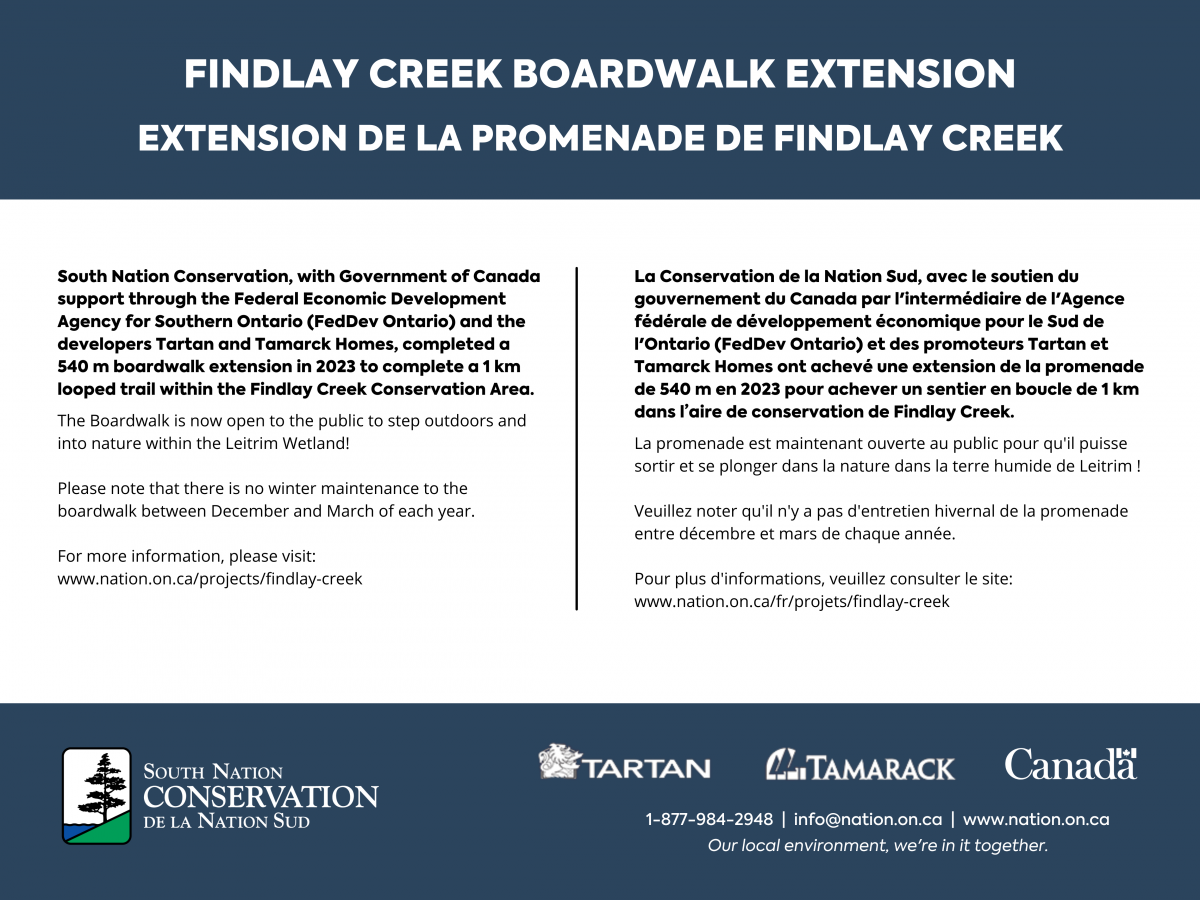
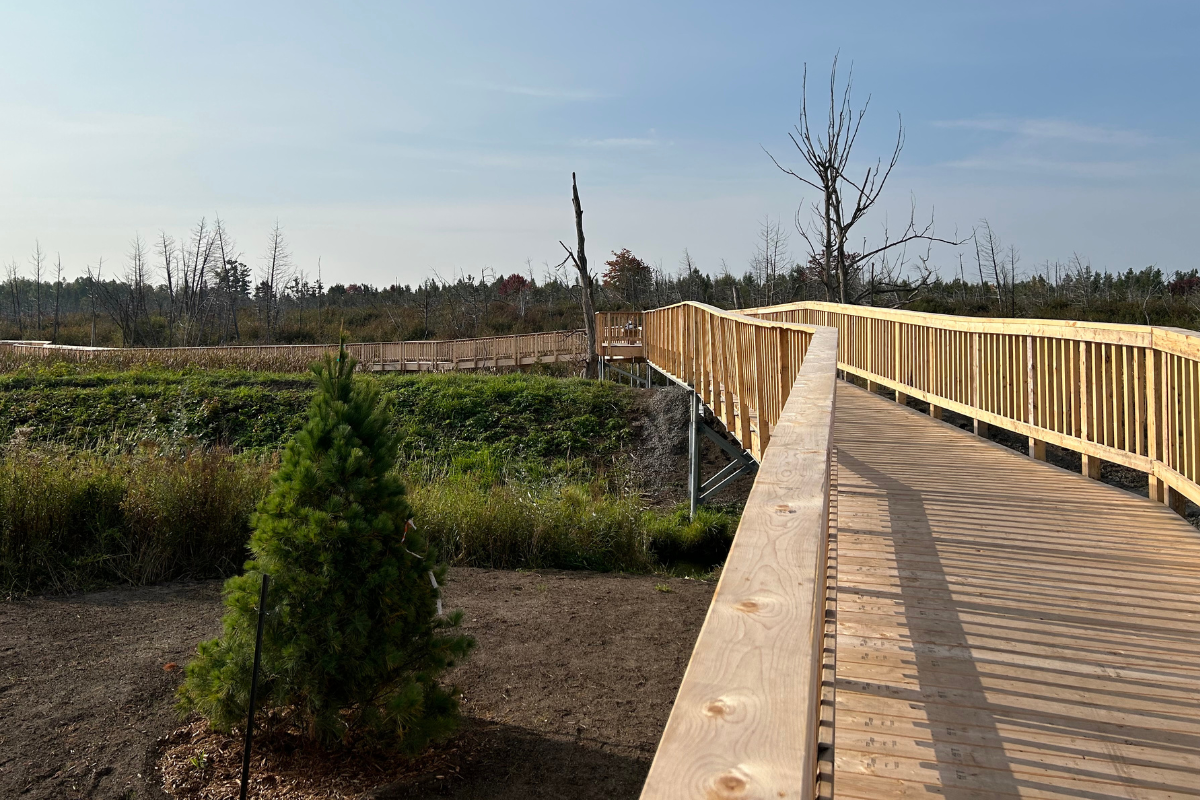
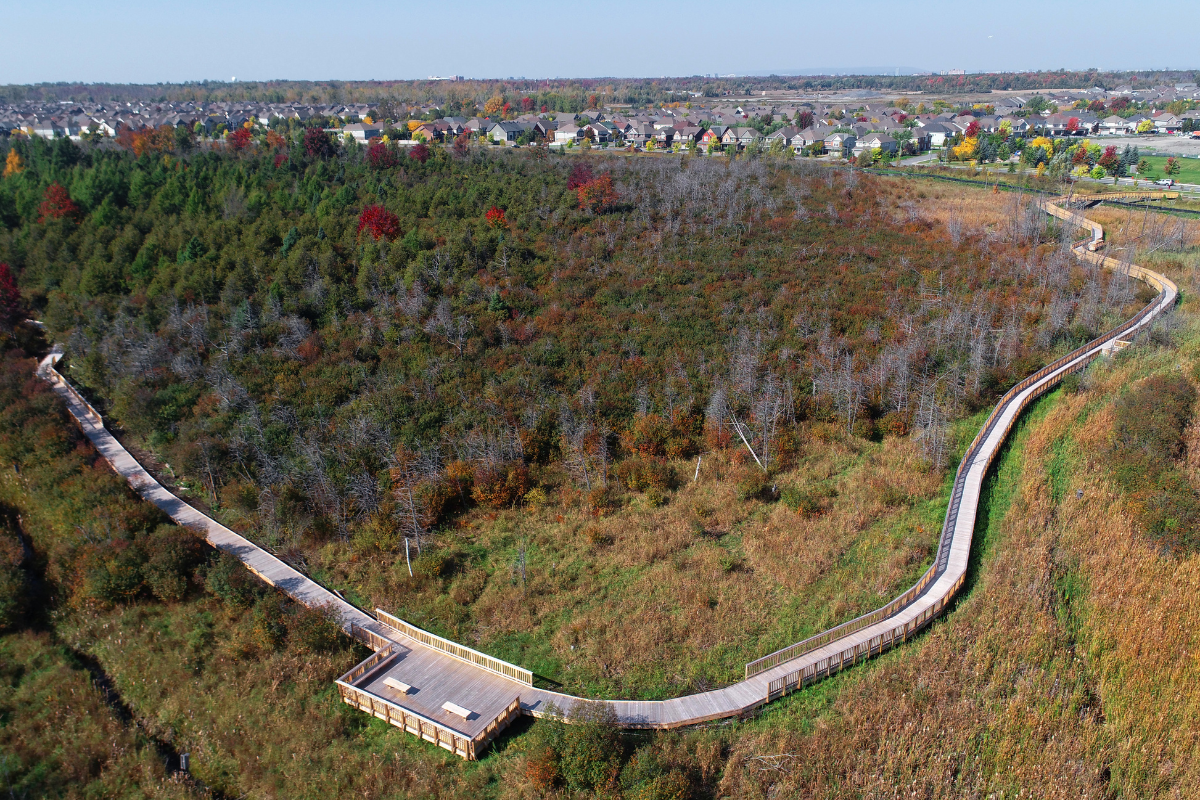
With Government of Canada support through the Federal Economic Development Agency for Southern Ontario (FedDev Ontario), SNC will be extending the Findlay Creek Boardwalk in 2023 by approximately 540 metres to complete the looped boardwalk network.
Environmental studies took place in 2022 to inform the placement of the boardwalk extension and minimize the impact on the natural environment. Draft design options were prepared and can now be accessed by the community for feedback.
The project will allow more accessibility to the recreational area and give residents of Findlay Creek the opportunity to explore the wetland in the future, while still preserving its natural features and important history.
Certain work activities are scheduled during winter months, when the ground is frozen, to limit the disruption to wetland habitat. However, much of the construction work will take place through Spring and Summer 2023, with the project completed by October 2023.
A public information session took place on February 1, 2023 at Vimy Ridge Public School, in Findlay Creek.
SNC hosted a re-opening of the boardwalk with the Findlay Creek Community Association in October 2023.
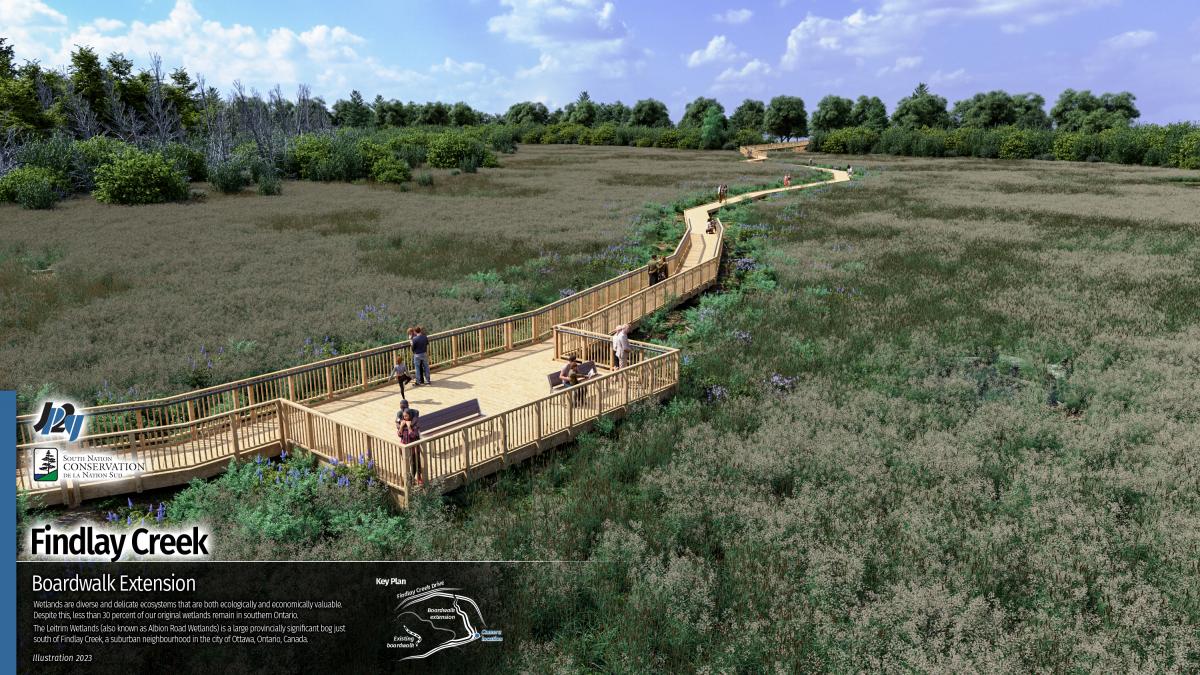
Boardwalk Design
Boardwalk extension designs were prepared following the completion of environmental and geotechnical studies within the Leitrim Wetland. Adjustments to the design were made following consultations with various stakeholders and the community.
The full set of final construction drawings can be viewed here: Issue for Construction - May 2023

More Information:
Findlay Creek Boardwalk Extension - Frequently Asked Questions
Findlay Creek Boardwalk Conservation Area
Draft Findlay Creek Boardwalk Extension Report
Letter to Residents of Findlay Creek
Leitrim Wetland Management Plan
Federal Funding Announcement Event - Agenda
Press Release: Project Announcement
Findlay Creek Boardwalk - Tender Drawings
Issue for Construction - May 2023
Findlay Creek Boardwalk Revitalization Project
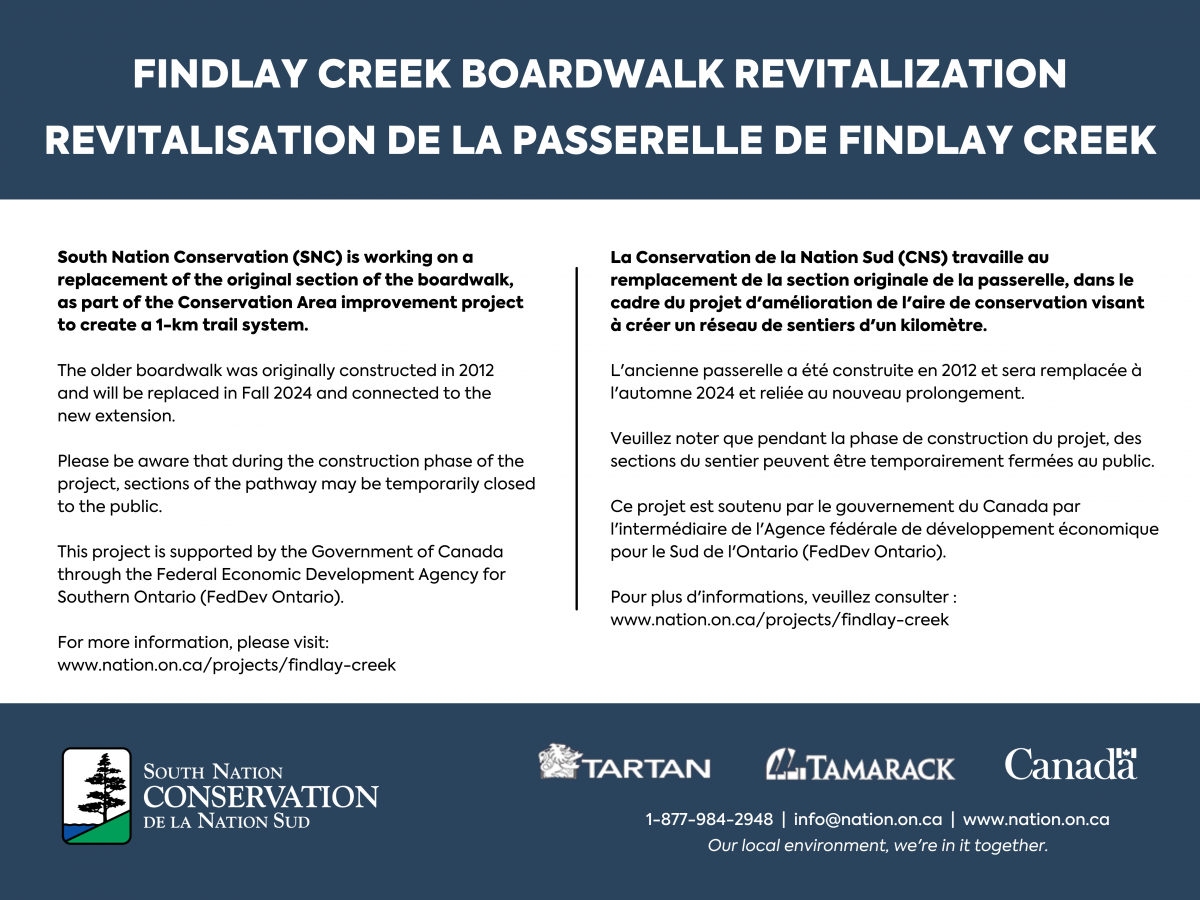
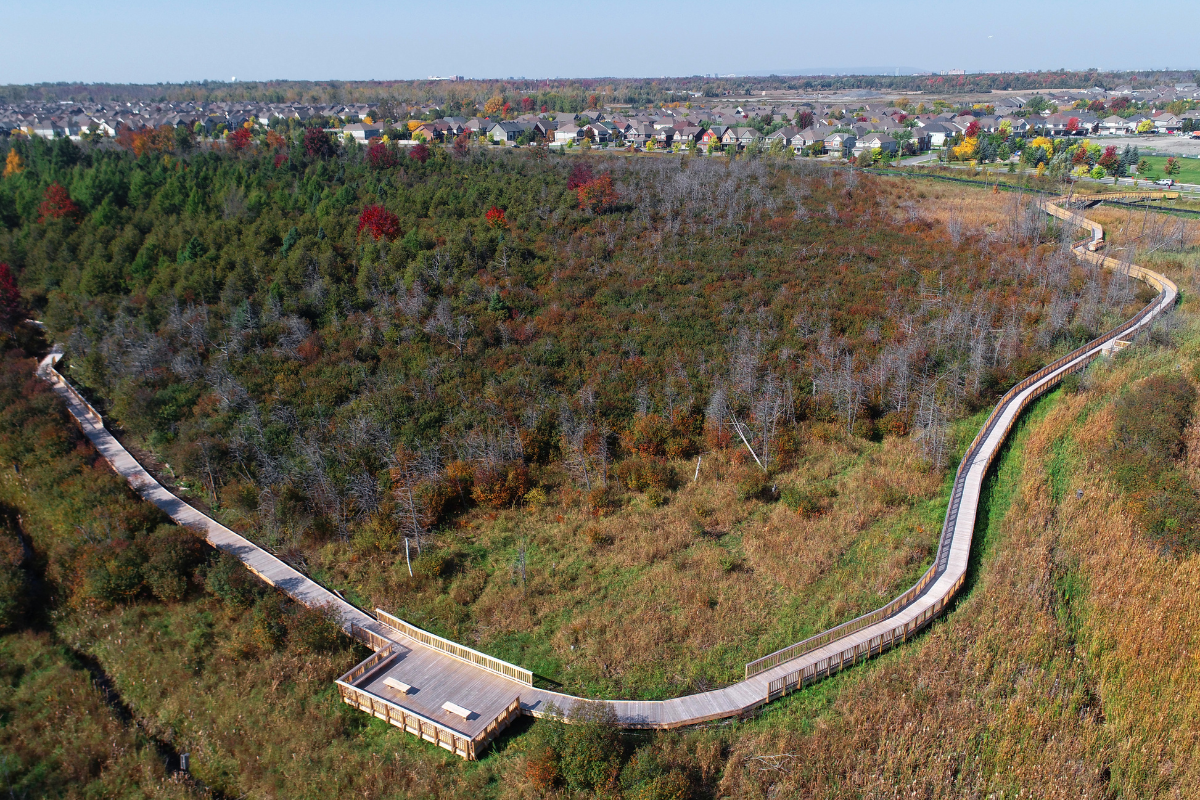
South Nation Conservation (SNC) replaced the older section of the Findlay Creek Boardwalk in the summer of 2024, as part of the Conservation Area improvement project to create a 1-km trail system.
In October 2023, SNC completed the extension to the Findlay Creek Boardwalk, extending the elevated trail through the Leitrim Wetland by 540 metres and creating a looped pathway with two points of entry.
The older section of the boardwalk was constructed in 2012 and construction to replace the structure and connect it to the new extension took place in August through October 2024.
This project is supported by the Government of Canada through the Federal Economic Development Agency for Southern Ontario (FedDev Ontario).

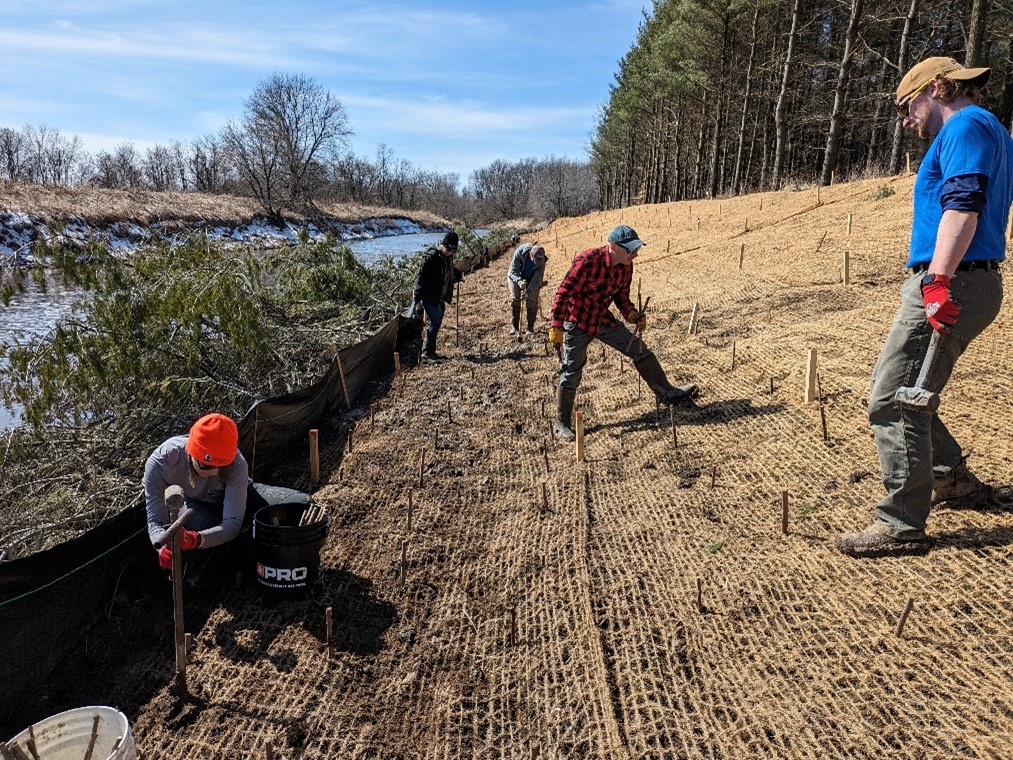
SNC worked with experts in natural river restoration and experienced contractors to re-slope and stabilize the eroding banks of the South Nation River at Oak Valley Pioneer Park.
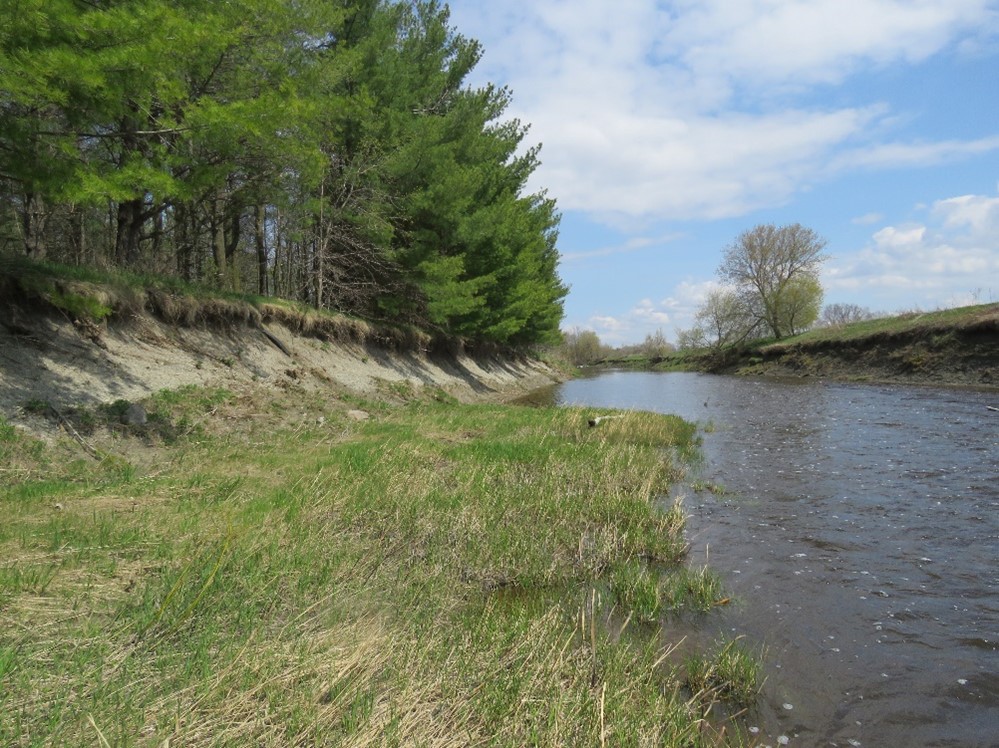
The riverbank at the park had eroded so severely that trees planted in the park were at risk of falling into the river. Soil and park lands were being lost at a swift rate, prompting the need for a significant erosion control project.
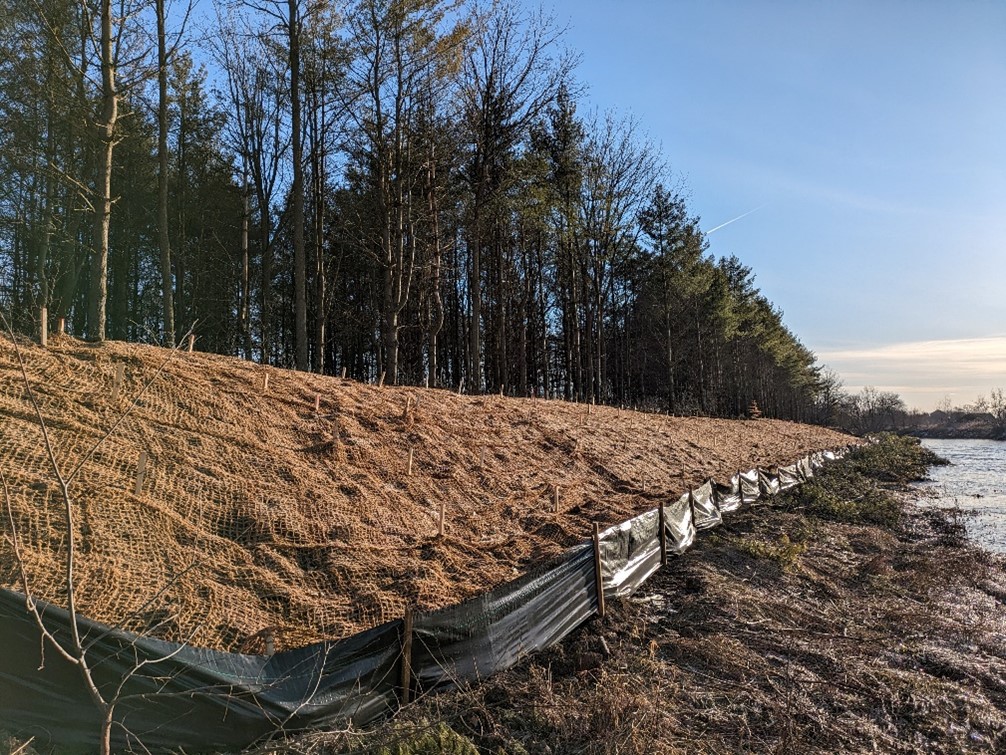
The project consisted of using heavy machinery to excavate soil from the bank back to a stable and more natural riverbank slope. Prior to the work, the riverbank consisted of a vertical drop over 2 meters in height to the river bottom. Excess soil was brought to a nearby SNC property and seeded back into agriculturally productive lands.
The riverbank at the park was reseeded with a native grass seed mix and a biodegradable erosion control blanket was used to cover the
fresh soil surface.
SNC staff worked to install over 2000 willow live stakes along the riverbank to further revegetate and stabilize the site with a network of shrub roots. Trees removed along the riverbank prior to the project were repurposed and anchored to the toe of the riverbank slope to protect the area from erosion during high water flows.
SNC will continue to monitor the site for stability and will evaluate the erosion control methods to adjust where necessary. Further tree planting, interpretative signage, and upgrades to the parks trails are planned to be completed in 2024.

Restoration Work is Completed at the J. Henry Tweed Conservation Area in Russell, Thanks to a Partnership with Ontario Power Generation
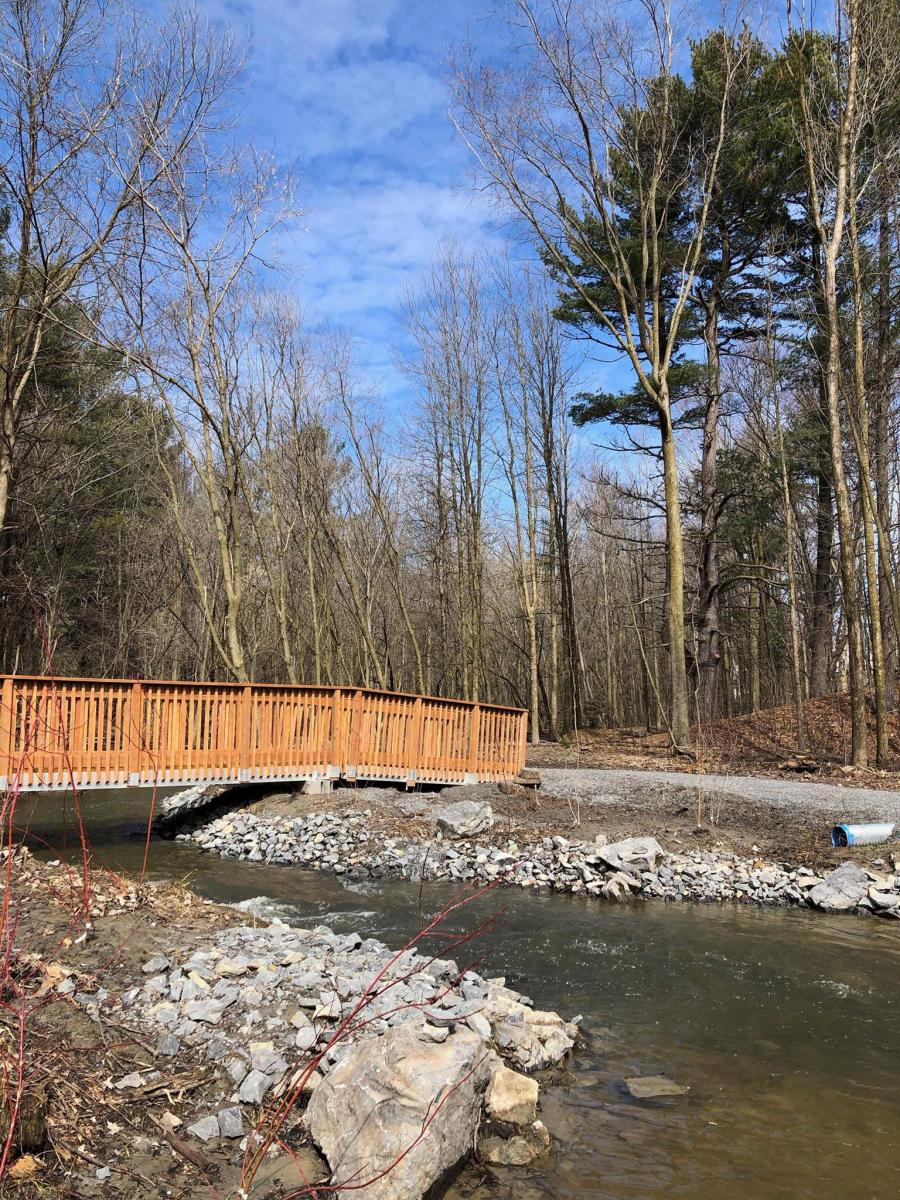
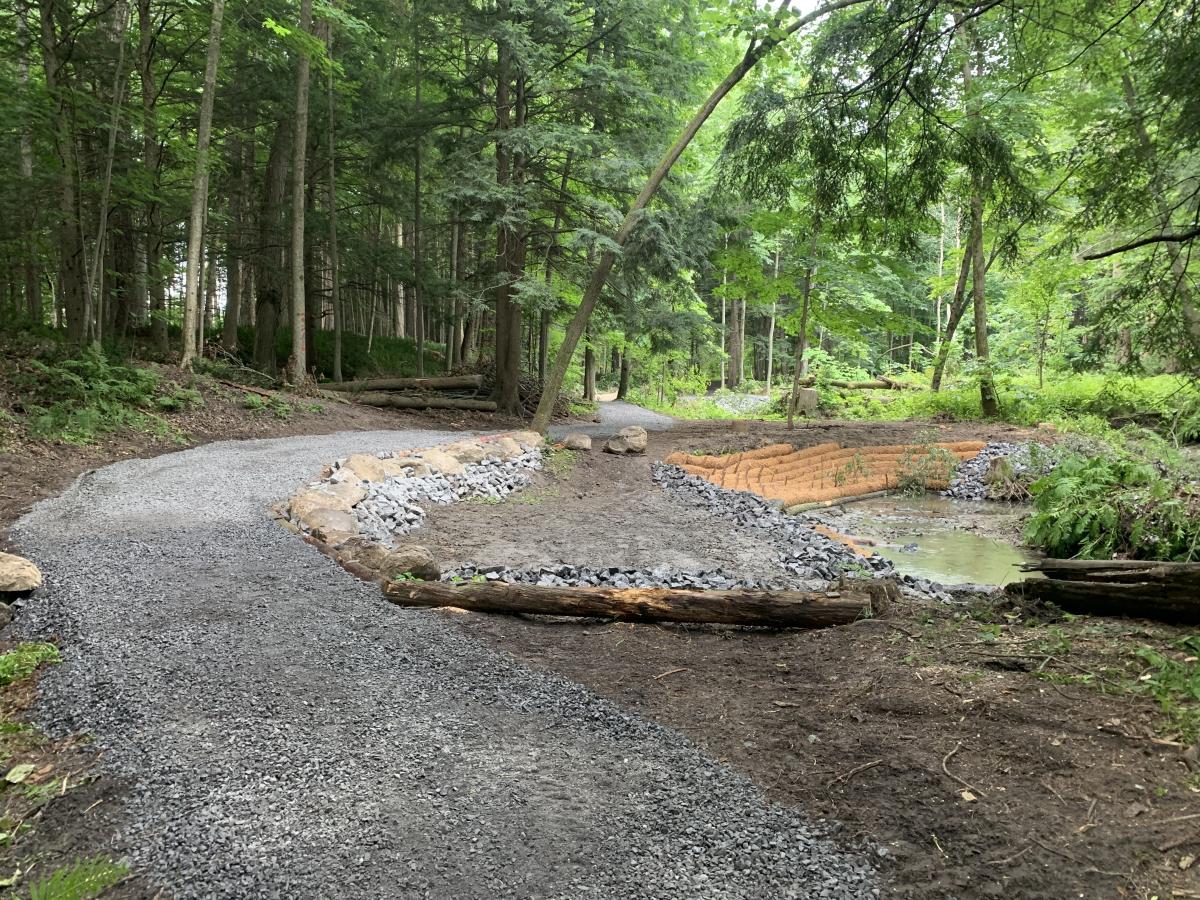
J. Henry Tweed Conservation Area has been the center of an extensive restoration project since 2019. The restoration activities that were completed in 2021 and 2022 have included native tree and shrub planting, repairing existing erosion and streambank stabilization, and restoring in stream habitat to increase biodiversity.
Since 2020, SNC has also resurfaced the park’s recreational trail, installed three new pedestrian bridges, restored sections of shoreline, and removed and replaced hundreds of dead and dying Ash Trees infected by the invasive Emerald Ash Borer.
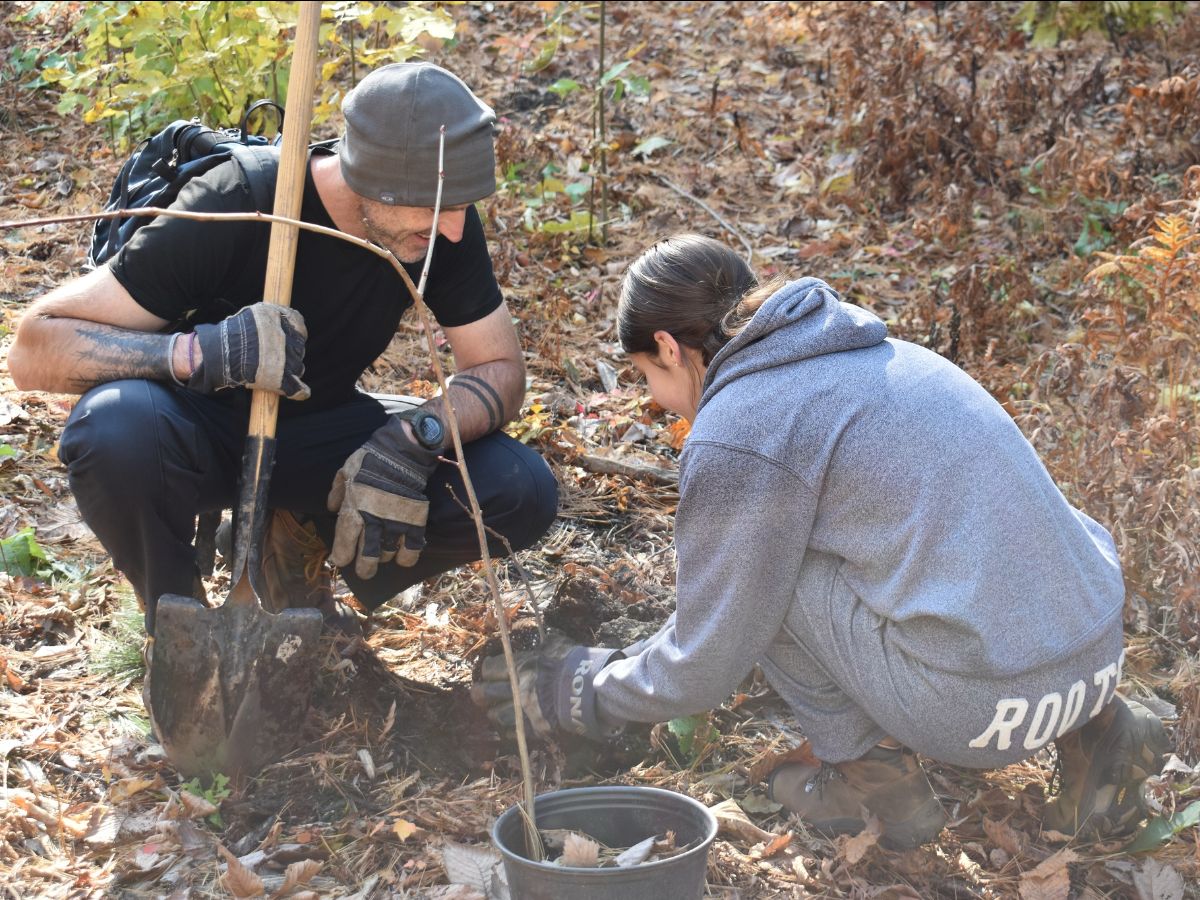
Community Days were hosted by SNC in October 2021 and October 2022 at the park, featuring project updates, a water quality demonstration and a property tour. Volunteers planted 100 trees during the event in 2022, adding to the 1,000 trees planted within the park earlier that Fall.
The J. Henry Tweed Conservation Area started as a 16-acre land donation to SNC in 1980 by Alex and Mable Little and Jean Hay to protect the family’s natural legacies and provide passive recreational opportunities.
Today, it is one of the Conservation Authority’s most popular public parks, welcoming over 20,000 visitors each year, and provides a serene natural green space surrounded by urban development in Russell.
Learn about the J. Henry Tweed Conservation Area here.
In 2016, South Nation Conservation (SNC) completed a three-year Biodiversity Project in partnership with Ontario Power Generation (OPG). The Project restored habitats for plants and animals in Woodlands, Wetlands and Grasslands! Project deliverables and highlights can be discovered below.
Woodlands
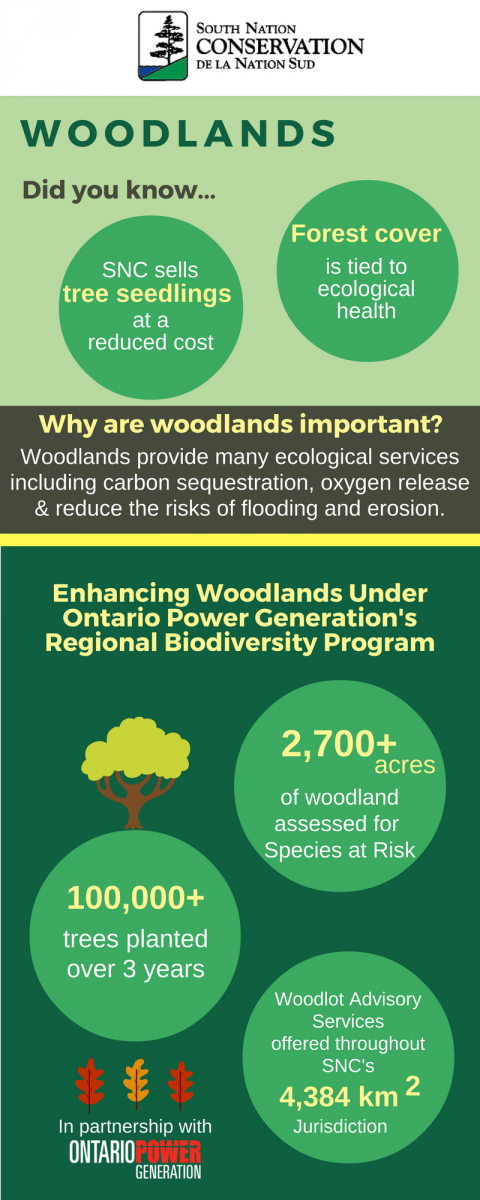
Woodlands provide many ecological services including; carbon sequestration, oxygen release, and reduce the risks of flooding and erosion. The partnership allowed the expansion of SNC’s Woodlot Advisory and tree planting services:
- 2,700 acres of woodland assessed for Species at Risk; and
- 100,000 trees planted over three years.
Grasslands
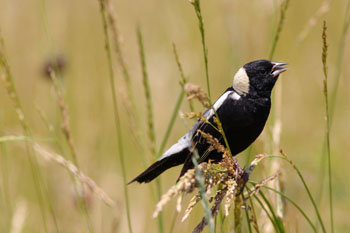
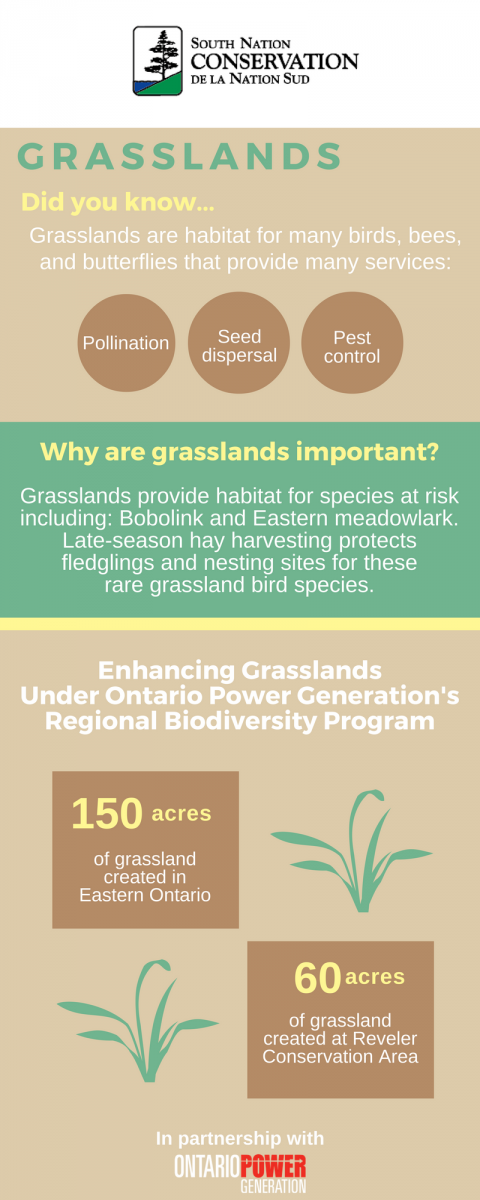
Grassland bird species such as the Eastern meadowlark, Loggerhead shrike and Bobolink, as well as pollinators require healthy grassland habitat. Grasslands foster pollination, seed dispersal, and pest control. Under OPG’s Regional Biodiversity Program:
- 60 acres of vital grassland habitat was created at Reveler Conservation Area; and
- A total of 150 acres of grassland was restored in Eastern Ontario.
Wetlands
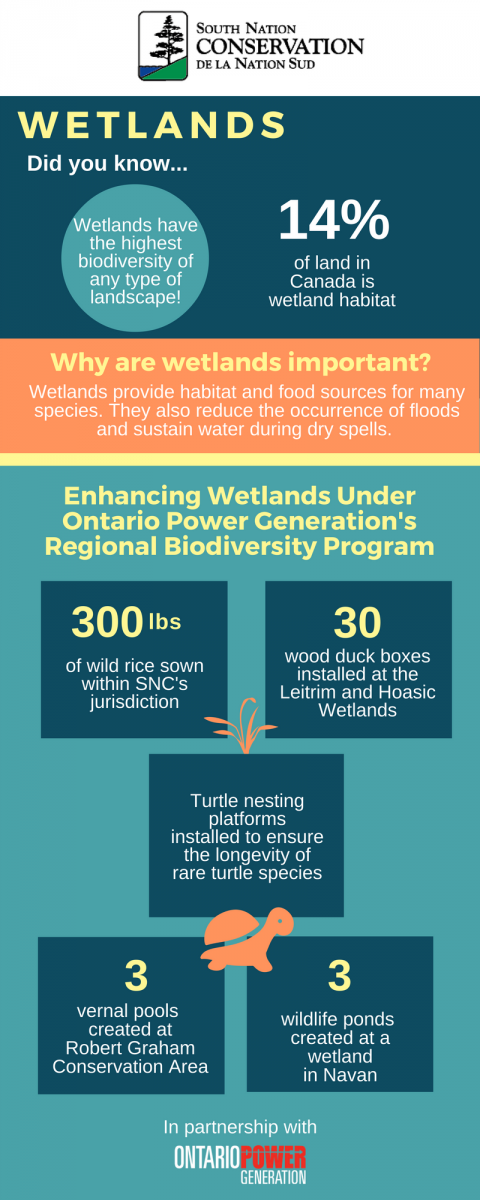
Wetlands provide habitat and food sources for many species. Healthy wetlands reduce the occurrence of floods, sustain water during dry spells, and increase spawning opportunities for fish. Wetland enhancement activities conducted by SNC included:
- 300 lbs of wild rice sown throughout SNC jurisdiction, to increase cultural values and food sources for wildlife;
- 30 Wood duck boxes installed at the Leitrim and Hoasic Wetlands;
- 3 vernal pools created at Robert Graham Conservation Area; and
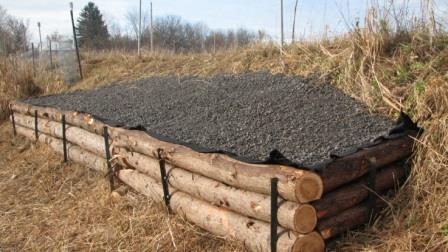
- Installation of turtle nesting platforms at safe and suitable turtle nesting sites, to ensure the longevity of rare turtle species.
Habitat Restoration work at SNC is proof that wildlife habitats can thrive, but changes to shorelines, forest cover and habitat fragmentation can degrade them. Healthy wildlife habitat is vulnerable to: clearing trees and vegetation along shorelines; excessive soil sliding into waterways; and grass clippings, which cause harmful nutrient levels.
We lead fish and wildlife habitat restoration projects such as: adding materials that help shelter juvenile fish; planting native vegetation for shade and oxygenating the water; creating safe and suitable nesting habitat for waterfowl and turtles; and reinforcing stream banks to stabilize active erosion.
Our project success includes walleye spawning enhancement projects; wetland restoration projects; and planting native trees, shrubs, and perennials to improve habitat throughout the jurisdiction.
Check out one of our factsheets to learn more about SNC's projects to restore wildlife habitat and increase biodiversity!
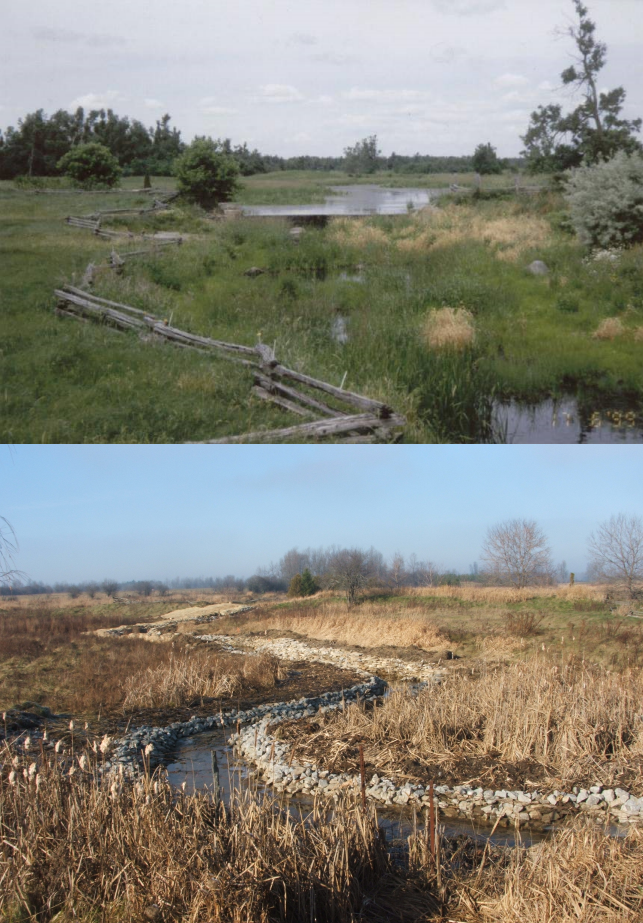
(Indian Creek Fish Habitat Restoration Project, 2016)
South Nation Conservation (SNC) is pleased to announce a three-year partnership with Ontario Power Generation and the United Counties of Prescott-Russell to restore an area of Larose Forest where red pine plantations deteriorated due to wet conditions. Restoration efforts will include enhancing the function of headwater drainage features, reducing erosion and increasing biodiversity through the planting of a treed “riparian area”.
Additionally, from time to time UCPR contracts SNC to assist with native plant inventories as well as harvest and operational plans.
Additional restoration efforts include recreating pit and mound topography, migration trials of Carolinian species and testing alternative native species for suitability in sandy soils and wet-prone sites. For more information read our Larose Forest Biodiversity project summary.
Annual Reports for the project are available for 2017, 2018 and 2019. As well as quarterly updates available here, Issue #1, Issue #3, and Issue #4.
Projects such as this provide invaluable information on species trials, site techniques, and habitat rehabilitation; SNC continues to be a leader in environmental remediation and conservation.
John Stoodley and his family have been farming along the South Castor Municipal Drain in Vernon for over two generations; primarily producing dairy, hay, soybean and corn.
John’s land is his most valuable asset, and past flooding and erosion has proven challenging.
Thanks to a variety of funding sources including the City of Ottawa’s Rural Clean Water Program and ALUS Ontario East, South Nation Conservation partnered to plant a grass buffer along the Municipal Drain through his property by squaring fields and sowing a multi-species grass mix.
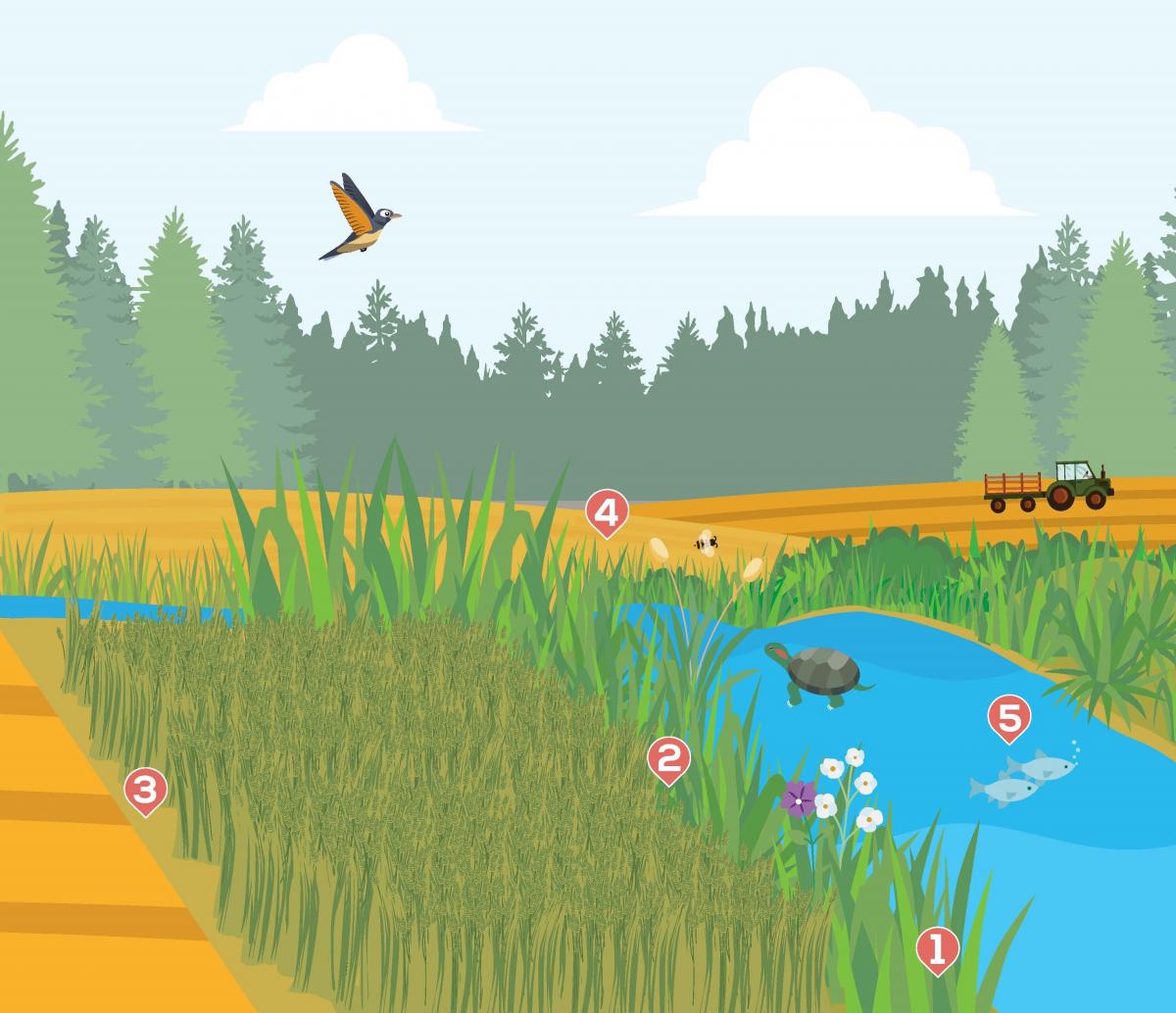
This helped stabilize the stream bank and reduce erosion to conserve valuable soil for his crops while protecting local water quality and providing habitat for fish and wildlife. The grass can also be harvested as hay to be sold or used on farm.
Why Plant a Grass Buffer?
Environmental Benefits:
- Filters runoff from adjacent land uses
- Traps sediments
- Reduces erosion and soil loss
- Provides habitat for pollinators
- Provides habitat for fish and wildlife
Benefits to Farming:
- Reduces flooding
- Helps keep nutrients on the field
- Conserves soil and produces hay
- Maintains pollination of crops
- Helps to improve local water quality
In 2019, SNC received a grant from the EcoAction Community Funding Program through the Federal Government. With this funding, SNC restored several kilometers of river shoreline by planting over 3,000 native trees and shrubs in partnership with local landowners, secondary schools and First Nations. Check out the EcoAction factsheet here!
Watercourse tree buffers are a simple way to help farmers protect their most valuable asset – their land. Buffers can be a combination of grass, shrubs or trees and help to lessen erosion, boost biodiversity and improve water quality.
Native edible trees and shrubs were planted alongside drains and can be harvested by the property owner, mixed native grasses are planted on the other side of the drain to facilitate future drain maintenance and can also be harvested. Incentives for best management practices, such as buffers, are available from SNC’s Clean Water Program, the Ottawa Rural Clean Water Program and Alternative Land Use Services (ALUS) - Ontario East.
Ontario’s Endangered Species Act (2007), has the potential to impact agricultural operations. At-risk grassland birds like Bobolink and Eastern Meadowlark use hayfields for habitat during part of their life cycle, which coincides with harvest operations. In this case, a three-year exemption to the Act regarding Bobolink habitat was granted and a committee—the Bobolink Round Table (BRT)—was formed to find a practical solution allowing for both unhindered agricultural operations and Bobolink/Eastern Meadowlark recovery to proceed.
The BRT recommends to the Province the development of an Overall Benefits Exchange Pilot program. The Exchange links borrowers and lenders of Species at Risk habitat. Borrowers are housing, renewable energy, or aggregate developers issued Overall Benefit Permits under the Act, which require compensation for loss of habitat from their development activities. Lenders are voluntary landowners, including farmers, environmental organizations, or municipalities that have existing suitable habitat or lands that can be developed as habitat.
SNC owns approximately 400 acres of non-forested land which is currently being assessed for suitability as Bobolink and Eastern Meadowlark habitat. If the land is determined to be suitable habitat, it will be placed in a habitat “bank” for future use in compensation agreements. If the land is determined to not be suitable habitat, but could be with some restoration, SNC will create a management plan for that land.
To date, SNC has created grasslands on three SNC owned properties and a fourth under agreement with the St. Lawrence Parks Commission at the Upper Canada Migratory Bird Sanctuary. To learn more about the grasslands SNC has created, check out the grasslands factsheet.