What is a Conservation Authority?
What is a Conservation Authority?
Most of southern Ontario, as well as the more developed areas of northern Ontario, are within the boundary of a Conservation Authority. Collectively, the jurisdictions include 90 per cent of the province's population.
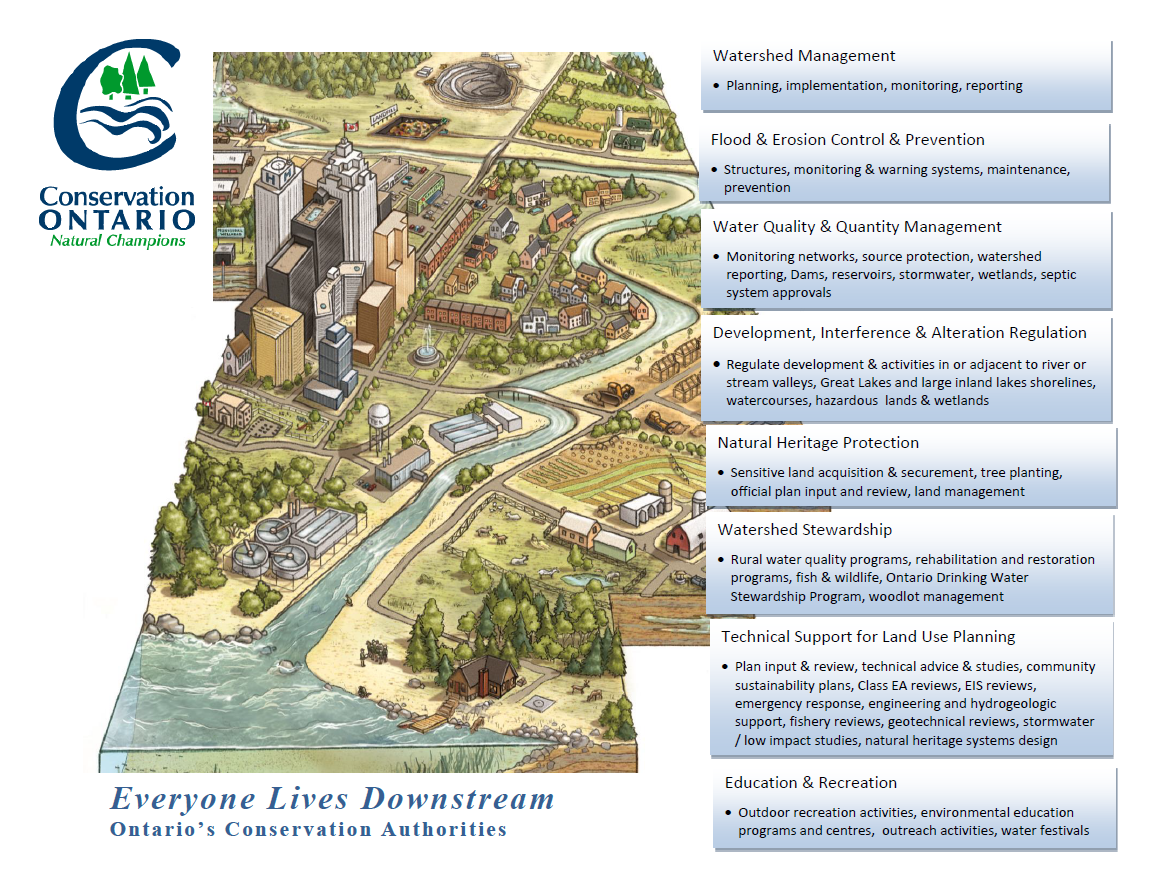
Conservation Ontario is the network of 36 Conservation Authorities — regional agencies that deliver services and programs that protect and manage natural resources in partnership with government, landowners, and other organizations. Conservation Authorities promote an integrated watershed approach balancing human, environmental, and economic needs. Conservation Authorities were created in 1946 by an Act of the Ontario legislature and organized on a watershed basis.
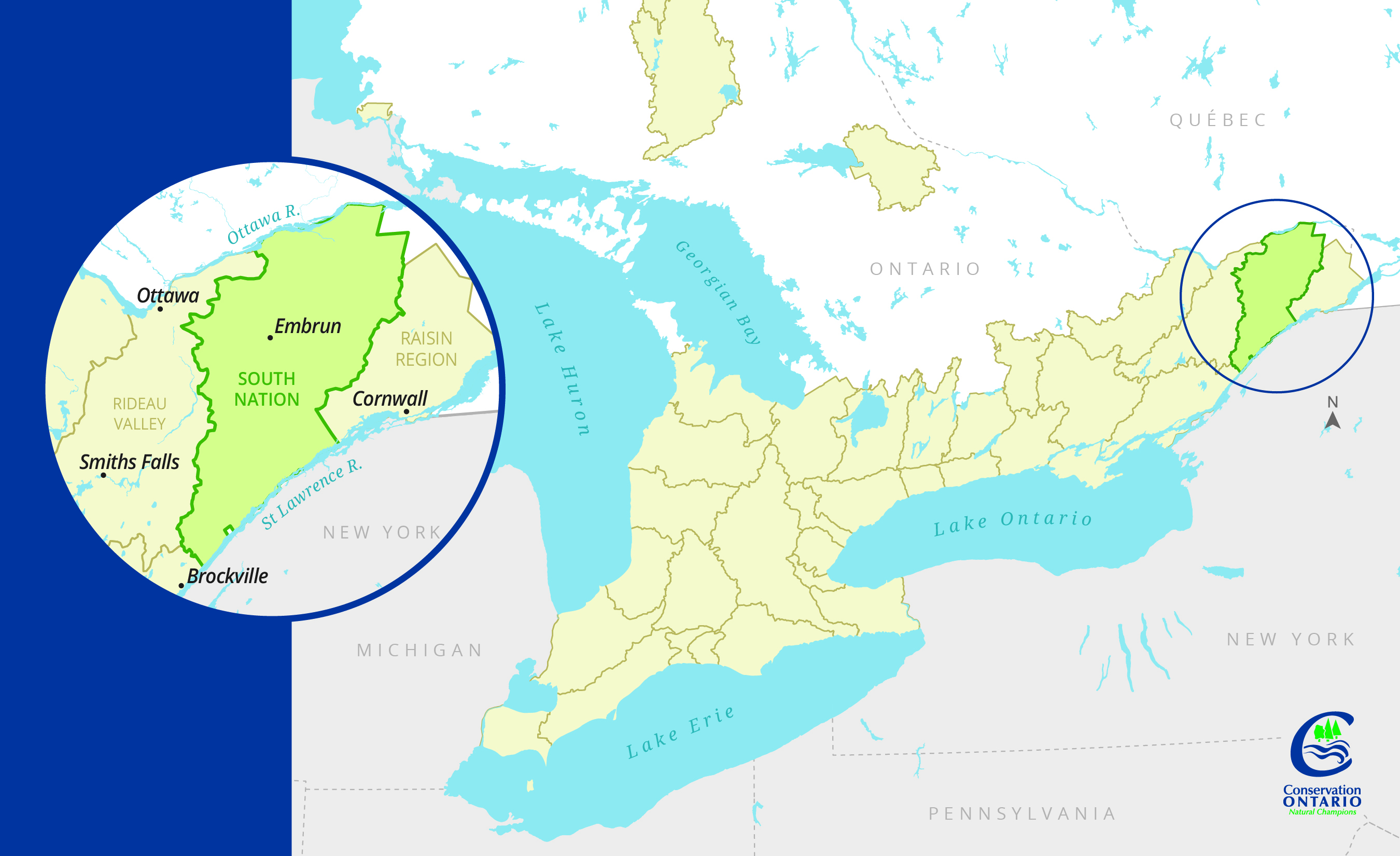
A watershed is an area of land that is drained into a body of water. The South Nation River begins north of Brockville and empties into the Ottawa River near Plantagenet. All of the land drained by the river is called the South Nation Watershed, an area that includes 5 major subwatershed (Upper, Middle, Lower, Bear Brook, Castor River) and 16 different municipalities.
Conservation Authorities receive funds in part through a tax levy on the municipalities within the watershed. SNC receives approximately $6.44 for every $100,000 in household assessment per home within its jurisdiction. Municipal funding accounts for approximately 35-50% of SNC's annual operating budget. Funding for programs and projects comes from government grants, self-generated revenue, and partnerships with businesses, organizations and individuals.